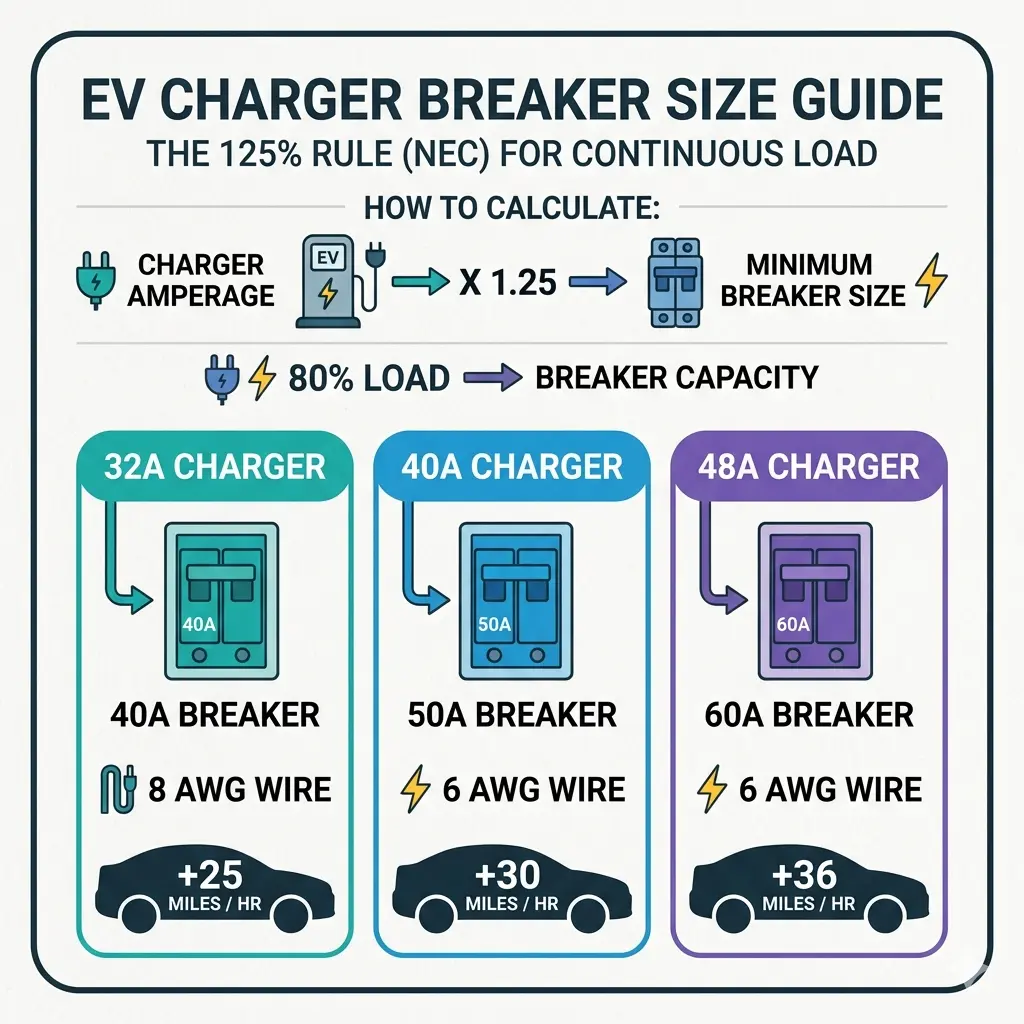
As the adoption of electric vehicles accelerates globally, electrical contractors, B2B procurement managers, and facility engineers frequently encounter a critical installation question: how should the power supply for these advanced charging stations be structured? Specifically, what are the EV charger safety requirements, and is an EV charger dedicated circuit strictly necessary?
This comprehensive guide details the technical nuances, electrical code mandates, and best practices regarding EV charging installation to ensure the utmost safety and system longevity.
Key Takeaways
- Dedicated Circuit Necessity: A dedicated circuit is overwhelmingly required by standard electrical codes.
- Continuous Load Classification: EV chargers pull maximum current for extended periods, necessitating specific breaker sizing rules (like the 125% rule).
- Code Compliance: Adhering to standards such as NEC 625 and IEC 61851 prevents fire hazards and liability issues.
- Alternatives: While load sharing exists for constrained panels, dedicated lines remain the optimal choice for performance.
Quick Answer: Do EV Chargers Require Dedicated Circuit Breakers?
Yes, EV chargers require a dedicated circuit breaker and circuit under most electrical codes. This ensures safe operation under continuous load, prevents overload, and reduces fire risk. In some cases, load management systems may be used as an alternative, but a dedicated circuit remains the standard approach.
For electricians and B2B decision-makers, bypassing this requirement is not just a performance issue; it is a fundamental violation of foundational EV charger safety requirements that can lead to catastrophic electrical failures.
Why Dedicated Circuits Are Required for EV Chargers
Continuous Load Requirement
An electric vehicle does not charge like a standard household appliance. EV charging often lasts more than 3 hours, drawing a consistent, heavy stream of electricity. In electrical engineering, any load operating at its maximum current for three hours or more is defined as a continuous load. EV chargers are classified as continuous loads and must be designed with additional safety margins. Without this buffer, the persistent heat generated can degrade wire insulation and internal breaker components over time.
High Power Demand
Modern charging infrastructure demands substantial power. A standard Level 2 EV charger commonly draws between 30A and 60A. When an appliance requires this magnitude of power for hours on end, sharing the line with lights, outlets, or other machinery becomes incredibly hazardous. The prolonged high-power operation creates significant thermal stress on the entire electrical system.
Safety and System Stability
The primary reason for isolating the charger’s power supply is to protect the surrounding infrastructure. Dedicated circuits ensure stable power supply and reduce the risk of overheating and electrical failure. When an electrical fault occurs, an isolated breaker guarantees that the issue is contained immediately, without knocking out power to other critical facility systems.
Code Requirements: NEC vs IEC for EV Charging Circuits
Requirements Under National Electrical Code
In North America, electrical installations are governed by strict guidelines. Under NEC 625, installing a Level 2 EV charger demands strict adherence to specific EV charger safety requirements. Foremost among them is the mandate for an EV charger dedicated circuit. Because it is a continuous load, installers must apply the 125% rule for breaker sizing. For instance, a 40A charger requires a 50A breaker. Furthermore, GFCI or RCD protection is highly scrutinized to prevent electric shock.
The NEC requires EV chargers to be installed on dedicated circuits sized for continuous load conditions.
Requirements Under International Electrotechnical Commission
Internationally, standards like IEC 60364 and IEC 61851 dictate EV charging installation parameters. The IEC similarly emphasizes the absolute necessity of independent circuits and coordinated protection mechanisms. IEC standards require precise RCD protection, often mandating Type B or Type A RCDs with 6mA DC detection to handle the unique fault profiles generated by electric vehicle batteries.
Why Compliance Is Critical
For commercial installations and B2B electrical contractors, compliance is non-negotiable. Firstly, there is the aspect of safety—protecting human lives and property from electrical fires. Secondly, there is inspection approval; local authorities having jurisdiction (AHJs) will fail any installation not meeting these standards. Lastly, legal and liability issues can destroy a contracting business if an improper installation results in a fire or injury.
What Happens Without a Dedicated Circuit Breaker?
Circuit Overload
When an EV charger shares a line with other devices, the combined amperage will quickly exceed the rated capacity of the circuit wiring and breaker. This overload forces the wiring to carry more current than it is physically capable of handling safely.
Frequent Breaker Tripping
A direct result of circuit overload is nuisance tripping. If an EV is charging and another device on the same circuit activates, the breaker will trip. This leads to a highly frustrating user experience, where fleet vehicles or employee cars are left uncharged.
Increased Fire Risk
The most severe consequence of ignoring EV charger safety requirements is the threat of thermal runaway in the wiring. Sharing circuits with EV chargers can lead to overheating and significantly increase fire risk. Melted insulation and exposed copper are common outcomes of improper circuit design.
Voltage Drop and Performance Issues
Beyond safety, sharing a circuit can cause severe voltage drop. The EV charger may sense the unstable voltage and reduce its charging speed, or shut off completely to protect the vehicle’s onboard electronics, severely crippling charging performance.
Load Sharing vs Dedicated Circuits: Which Is Better?
What Is Load Sharing?
Load sharing (or dynamic load management) is a smart charging technology where multiple EV chargers share a single higher-capacity power supply. The system dynamically allocates available power among the connected vehicles based on real-time capacity and demand.
Advantages of Load Sharing Systems
For facilities with constrained electrical panels, load sharing avoids the massive capital expenditure of a full utility service upgrade. It lowers initial installation costs and allows a location to deploy multiple charging points even when total panel capacity is limited.
Limitations of Load Sharing
While cost-effective, this approach has drawbacks. Load sharing systems reduce installation cost but may limit charging speed and system reliability. If four vehicles plug into a shared system simultaneously, each vehicle receives a fraction of the maximum charging speed.
Why Dedicated Circuits Are Still Preferred
For optimal reliability, professional electricians still advocate for isolated lines. Dedicated circuits provide maximum safety, consistent performance, and full charging capacity.
| Feature | Dedicated Circuit | Load Sharing |
|---|---|---|
| Safety & Compliance | Highest safety margin; fully compliant with all NEC/IEC codes. | Compliant if managed by approved smart systems, requires careful engineering. |
| Performance | Guarantees 100% maximum charging speed at all times. | Charging speeds fluctuate based on the number of active users. |
| Installation Cost | Higher upfront cost due to individual wire runs and breakers. | Lower cost per unit, as multiple chargers utilize a single conduit/feed. |
| Scalability | Limited by physical panel space and total service capacity. | Highly scalable for fleets and large commercial parking lots. |
| Best Use Case | Single-family homes, critical fleet vehicles needing rapid turnaround. | Apartment complexes, office buildings, constrained commercial panels. |
Typical Home EV Charging Setup
Standard Installation Structure
The architecture of a compliant EV charging installation is straightforward but must be executed precisely. The flow of power is visualized as:
Main panel → Dedicated breaker → EV charger
Recommended Protection Devices
- Circuit Breaker (MCB / MCCB): Sized appropriately for continuous load.
- RCD / RCBO: Essential RCD protection to detect residual currents and prevent shock hazards.
- Surge Protection (Optional but Recommended): Protects the expensive internal electronics of the Level 2 EV charger from external power surges.
When Can Load Sharing Be Used Instead?
Situations Where Load Sharing Makes Sense
An EV charger dedicated circuit is not always physically possible without a massive infrastructure overhaul. When a facility faces severe panel capacity limitations but requires multiple EV charging points, load sharing is the legally and technically viable alternative.
Smart EV Charger Integration
Modern load management relies on smart EV charger integration. These systems automatically adjust power output to prevent overloading the main panel. By monitoring the total building load in real time, the chargers throttle down their draw during peak facility usage, ensuring the main breaker never trips.
Common Mistakes in EV Circuit Design
Not Using a Dedicated Circuit
The most pervasive error by untrained installers is tapping into an existing garage circuit (like one used for a dryer or welder) to power the EV charger. This is a direct violation of safety protocols.
Ignoring Code Requirements
Failing to adhere to NEC 625 or IEC 61851 parameters leaves electricians open to massive liability. Code compliance is the minimum standard for safety, not a suggestion.
Undersized Breakers
Incorrect breaker sizing is common when the continuous load rule is ignored. Installing a 40A breaker for a charger that pulls 40A will inevitably result in thermal degradation and tripping, as it lacks the required 125% headroom (which would require a 50A breaker).
Overloading Existing Circuits
Adding an EV charger to a panel that lacks the overall load capacity to support it, even if placed on its own breaker, overloads the main electrical service, creating a severe fire hazard at the utility entry point.
FAQ: EV Charger Circuit Requirements
Do EV chargers always need a dedicated circuit?
Yes, in almost all standard scenarios, especially when installing a Level 2 EV charger, a dedicated circuit is mandated by electrical codes to handle the continuous high-power draw safely.
Can load sharing replace a dedicated circuit?
In specific commercial or multi-unit residential applications, approved smart load management systems can be used. However, dedicated circuits remain the safer, more reliable standard for guaranteed performance.
What size breaker is required for EV chargers?
Breaker sizing depends on the charger’s maximum output, factoring in the continuous load requirement. Typically, a 40A to 60A breaker is required, calculated at 125% of the charger’s continuous draw.
Are dedicated circuits required by code?
Yes. Under the most widely adopted standards, including the National Electrical Code (NEC) and the International Electrotechnical Commission (IEC), dedicated lines are a strict requirement.
What is the safest setup for EV charging?
The safest configuration is an EV charger dedicated circuit with proper breaker sizing, integrated RCD protection, and high-quality, properly gauged copper wiring terminating at a hardwired unit.
Conclusion: Dedicated Circuits Are the Standard for EV Charging Safety
In the evolving landscape of electric vehicle infrastructure, cutting corners on electrical installations is a risk no professional should take. While smart load management serves as an excellent supplementary solution for constrained environments, the isolated circuit remains the undisputed gold standard. Dedicated circuit breakers are the standard solution for EV chargers, ensuring compliance, safety, and optimal performance in residential and commercial installations. Understanding and applying these EV charger safety requirements guarantees long-term reliability and peace of mind for both the installer and the end user.