Key Takeaways
This comprehensive guide explores the various low voltage circuit breakers available in the market. Understanding their technical specifications, optimal application environments, and core protection mechanisms is critical for safe and compliant electrical installations.
Quick Overview: What Types of Circuit Breakers Exist?
Low voltage circuit breakers can be classified by design (MCB, MCCB, ACB), function (RCCB, RCBO), current type (AC vs DC), and application (residential, industrial, solar, EV charging). Each type serves a specific role in electrical protection systems. Choosing the right device requires a fundamental understanding of load characteristics, fault current possibilities, and environmental factors impacting electrical distribution networks.
Introduction: Why Are There So Many Types of Circuit Breakers?
The Complexity of Modern Electrical Systems
The global electrical landscape has evolved significantly. From simple residential lighting to complex industrial manufacturing lines and renewable energy grids, the demands placed on power distribution are immense. Different electrical systems require tailored solutions to manage specific current ratings, accommodate unique environmental conditions, and fulfill rigorous safety criteria. Different circuit breaker types exist because electrical systems vary widely in load, voltage, and protection requirements. A single, one-size-fits-all approach is technically impossible and inherently unsafe.
Why Choosing the Right Type Matters
Selecting the precise circuit breaker is not merely a matter of operational functionality; it is the cornerstone of electrical system integrity. First and foremost is safety—protecting human life from fatal electric shocks and preventing electrical fires caused by extreme thermal overloads. Compliance with international and regional codes ensures legal and regulatory conformity. Furthermore, using the correct breaker guarantees system stability, maximizes operating continuity by minimizing nuisance tripping, and ultimately reduces the total lifecycle cost of the electrical infrastructure through prolonged equipment lifespan and reduced maintenance interventions.
Classification by Design: MCB vs MCCB vs ACB
What Is a Miniature Circuit Breaker (MCB)?
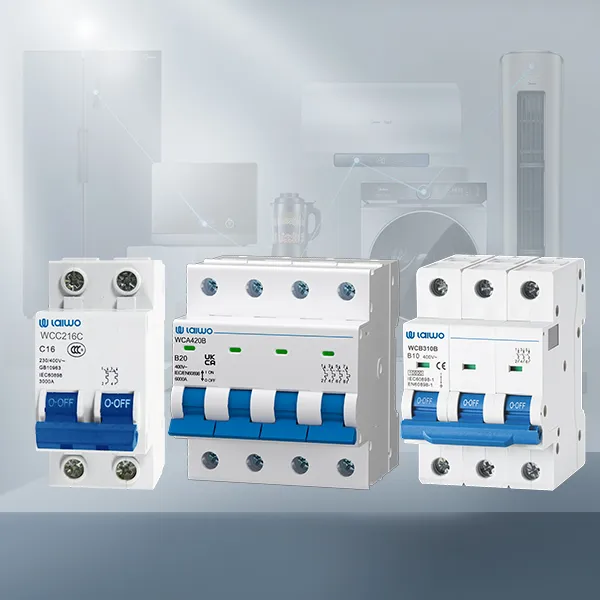
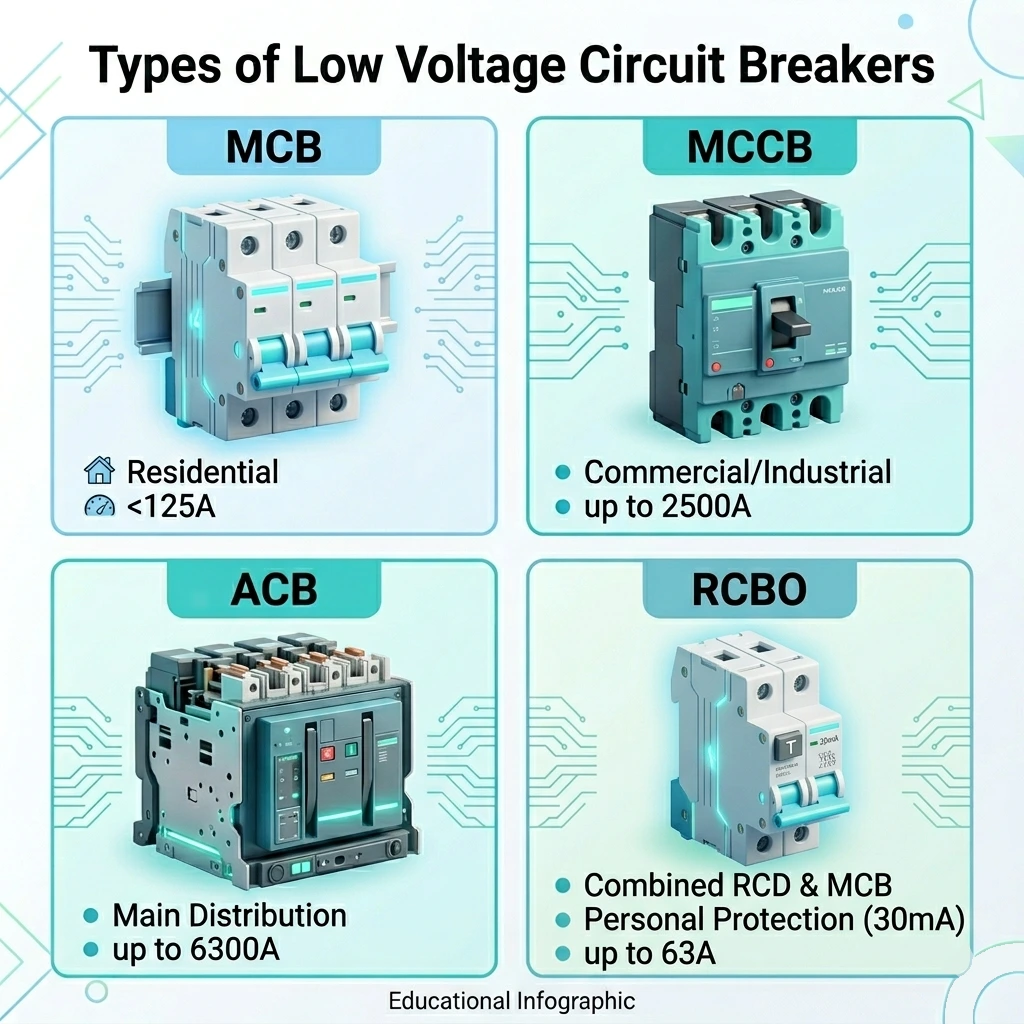
A Miniature Circuit Breaker (MCB) is an electromechanical device designed to protect an electric circuit from overcurrent, which can manifest as either an overload or a short circuit. Typically rated for low current applications (usually ≤125A), MCBs feature a fixed trip setting, meaning their operational parameters cannot be adjusted by the user. They are compact, reliable, and highly responsive to lower-tier fault currents. MCBs are used for low-current circuits such as residential lighting and small appliances. For a deeper analysis of how they differ from their larger counterparts, review our guide on MCB vs MCCB. Additionally, ensuring proper sizing for domestic installations is crucial; learn more about home breaker sizing.
What Is a Molded Case Circuit Breaker (MCCB)?
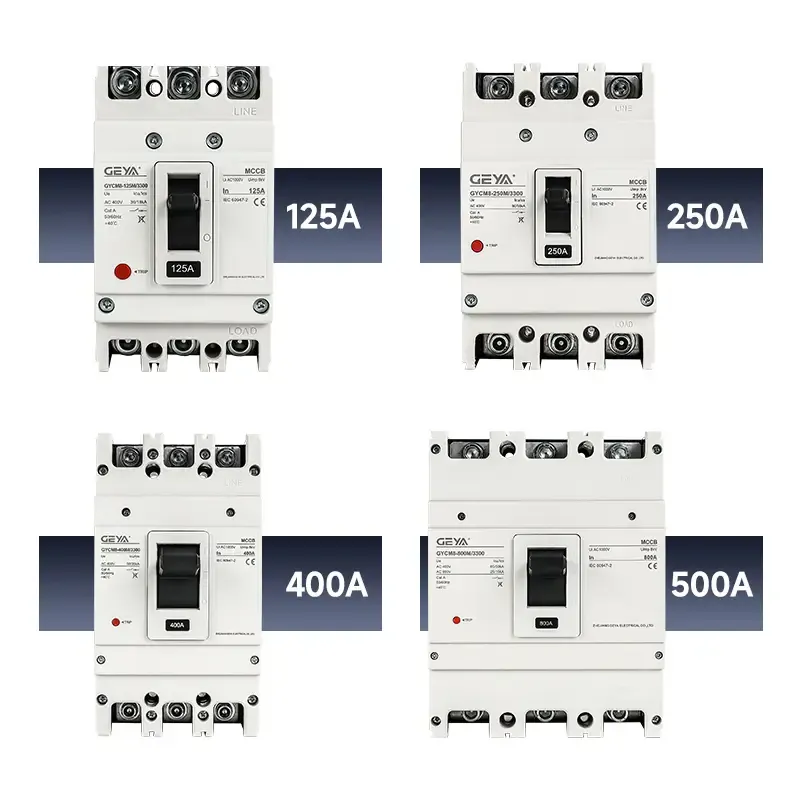
Molded Case Circuit Breakers (MCCBs) step up the protection scale, managing significantly higher current ratings—often ranging from 15A up to 2500A or more. Unlike MCBs, MCCBs frequently offer adjustable trip settings, allowing electrical engineers to fine-tune the protection curve based on the specific load profile and coordination requirements of the downstream network. MCCBs are widely used in industrial and commercial distribution systems due to their flexibility and higher breaking capacity. They serve effectively in protecting heavy machinery, large motor circuits, and commercial main panels. Explore various industrial breaker types to understand their diverse enclosures, or see a direct comparison in our MCCB vs MCB breakdown.
What Is an Air Circuit Breaker (ACB)?
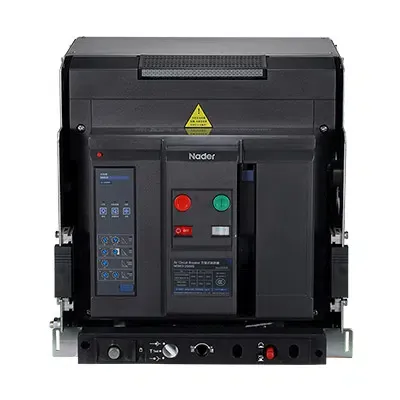
Air Circuit Breakers (ACBs) represent the heavyweights of low-voltage protection. Operating in the open air rather than inside a molded enclosure, ACBs handle massive currents, often between 800A and 6300A. They boast robust, open-frame designs that are fully maintainable and modular. ACBs are typically used as main breakers in large industrial electrical systems. Their immense short-circuit breaking capabilities and sophisticated, programmable electronic trip units make them the primary defensive line at the main switchgear level. Discover more about power distribution in industrial systems.
Classification by Function: RCCB, RCBO, and Protection Types
What Is an RCCB (Residual Current Circuit Breaker)?
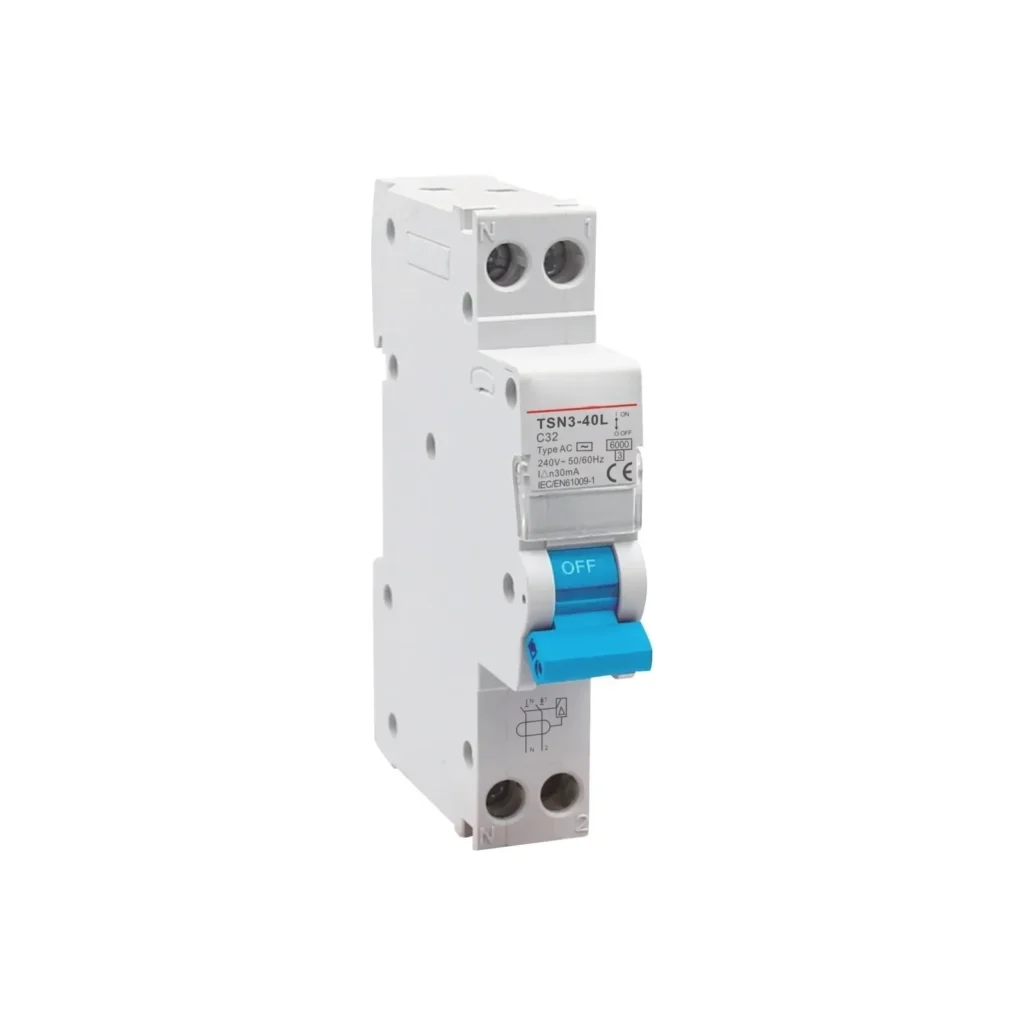
The Residual Current Circuit Breaker (RCCB) is engineered specifically for earth fault detection. By continuously monitoring the balance between live and neutral currents, it detects minimal leakage currents (e.g., 30mA) that could pass through a human body to the ground. However, it is vital to note a critical limitation: RCCBs protect against electric shock but do not provide overcurrent protection. Therefore, they must always be paired with an MCB or a fuse in the same circuit to offer complete safety.
What Is an RCBO?
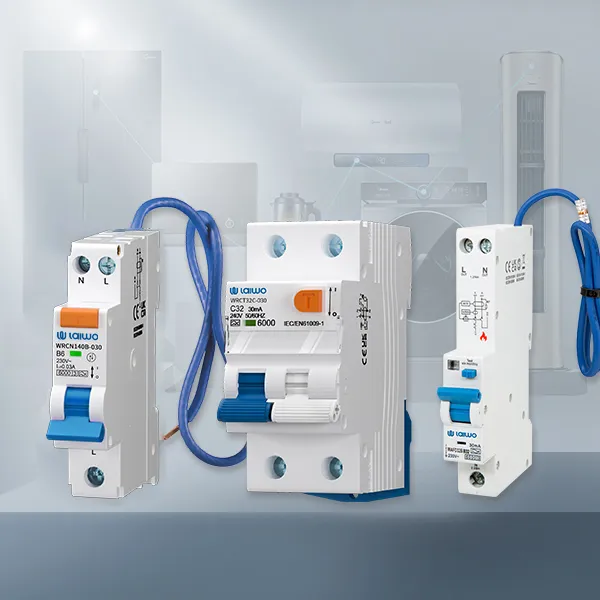
An RCBO (Residual Current Breaker with Overcurrent protection) bridges the functional gap between an MCB and an RCCB. RCBO combines overcurrent and leakage protection in a single device. This compact configuration saves significant space in the distribution board and simplifies the wiring process. When a fault occurs, it is easier to isolate the exact problem circuit since each RCBO independently controls and protects its respective line. This feature is particularly valuable in modern infrastructure; read about MCB vs RCBO for EV installations.
Thermal vs Magnetic Protection
Understanding the internal mechanisms of a breaker clarifies how it reacts to different faults. Thermal overload protection involves a bimetallic strip that gradually heats and bends when exposed to sustained, moderately high currents (overloads), eventually tripping the mechanism. In contrast, magnetic short-circuit protection relies on an electromagnetic coil that instantly forces the breaker open when exposed to the massive, sudden current spikes characteristic of a short circuit. Most modern breakers use a combination of thermal and magnetic protection mechanisms to ensure both immediate and delayed safety responses.
Classification by Application: Where Each Breaker Type Is Used
Residential Applications
In homes and domestic buildings, the primary focus is on protecting inhabitants from electrocution and preventing fires caused by overloaded wiring. Consequently, distribution boards predominantly feature MCBs for individual lighting and outlet circuits, alongside RCBOs for areas prone to moisture like kitchens and bathrooms. Understanding the layout of home electrical systems is essential for mapping out these devices. To ensure optimum safety, buyers should evaluate the best breakers for home use.
Industrial Applications
Industrial settings demand rugged durability, adjustable settings, and massive fault clearance capabilities. Manufacturing plants, data centers, and heavy processing facilities rely heavily on MCCBs for sub-distribution and ACBs for main power intake. These devices coordinate with advanced motor protection relays and PLCs to maintain operational continuity. Comprehensive planning is supported by referring to a detailed industrial breaker guide.
Solar Power Systems
Photovoltaic installations operate differently than standard AC grids. Since solar panels generate Direct Current (DC), standard AC breakers are insufficient and inherently unsafe for interrupting solar circuits. Specialized DC breakers and robust DC-rated MCCBs are utilized to handle the specific arc-extinguishing requirements of continuous DC voltage. Ensuring proper solar protection guarantees the longevity of inverters and battery arrays.
EV Charging Systems
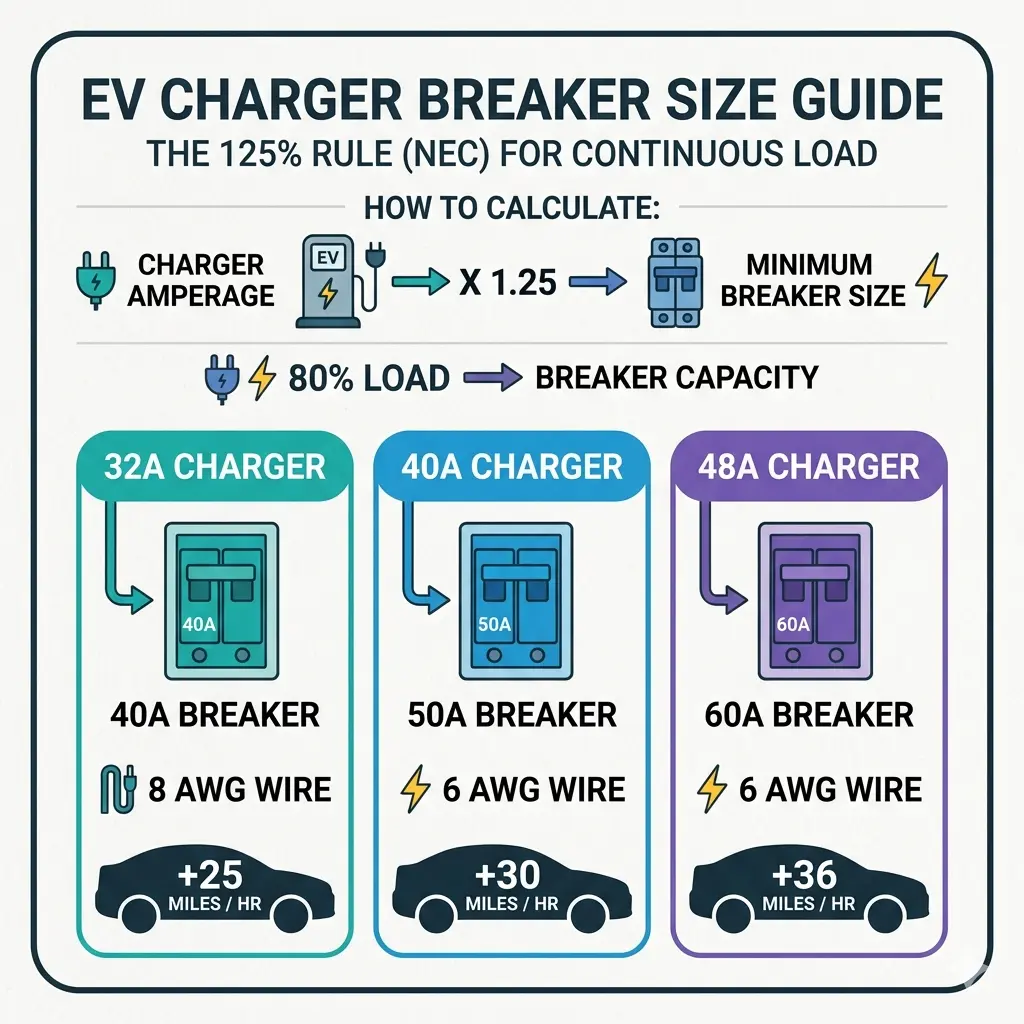
The rapid expansion of electromobility presents unique challenges for electrical protection. Electric vehicles involve significant current draws and sophisticated onboard chargers that can leak DC current back into the AC grid. EV charging systems require specialized protection including RCBO, RCD, and DC-compatible breakers. Proper infrastructure dictates adherence to strict safety standards. Professionals must understand the EV protection pillar infrastructure, choose appropriate RCD types for EV (such as Type B or Type A-EV), and master the deployment of AC vs DC breaker combinations at charging points.
AC vs DC Circuit Breakers: Why the Difference Matters
Key Difference
One of the most dangerous errors in electrical installation is conflating Alternating Current (AC) and Direct Current (DC) breakers. Alternating current naturally alternates its polarity, passing through zero volts 100 or 120 times per second (depending on a 50Hz or 60Hz grid). This zero-crossing naturally aids in extinguishing the electrical arc formed when a breaker opens under load. DC current flows continuously without zero-crossings. Therefore, AC breakers rely on zero-crossing, while DC breakers require forced arc suppression through mechanisms like magnetic blowouts or specially designed arc chutes.
Where DC Breakers Are Required
As electrical topologies evolve, the prominence of DC systems is growing rapidly. You will absolutely require specialized DC breakers in EV charging stations, solar PV generation networks, and large-scale battery storage facilities. Substituting an AC breaker into these applications poses a severe fire risk, as the AC device will likely fail to extinguish a DC arc fault. Read more in our technical overview of AC vs DC Circuit Breakers.
How to Choose the Right Circuit Breaker Type
Proper selection is a systematic process requiring attention to detail and rigorous calculation.
Step 1: Identify the Application
Determine the primary environment: Is this for a residential flat, a heavy industrial plant, a commercial solar array, or a rapid EV charging hub? The application dictates the baseline category of breaker required.
Step 2: Determine Current and Voltage
Perform precise load calculations to establish the continuous operating current. Simultaneously, identify the system voltage (e.g., 230V AC, 400V AC, or 1000V DC) and calculate the prospective short-circuit current to ensure the breaker has an adequate breaking capacity (kA rating).
Step 3: Select Required Protection Type
Assess what exact hazards need mitigation. Breaker selection must consider both overcurrent protection and additional safety requirements such as leakage detection. If earth faults are a risk, ensure RCD or RCBO functionality is integrated.
Step 4: Check Standards and Compliance
Never bypass regulatory compliance. Ensure that the chosen components are certified according to relevant international standards (such as IEC 60898 for household MCBs or IEC 60947-2 for industrial circuit breakers), UL listings in North America, and specific regional code requirements.
| Application | Typical Breaker | Key Consideration |
|---|---|---|
| Residential Housing | MCB, RCBO | Compact size, 30mA leakage protection for human safety. |
| Commercial & Industrial | MCCB, ACB | High breaking capacity, adjustable trip units, coordination. |
| Solar & Battery Storage | DC Breaker | Robust DC arc suppression, high DC voltage ratings. |
| EV Charging Stations | RCBO + Type B RCD | Detection of smooth DC residual currents, continuous heavy load. |
Common Mistakes When Choosing Breaker Types
Choosing Based Only on Price
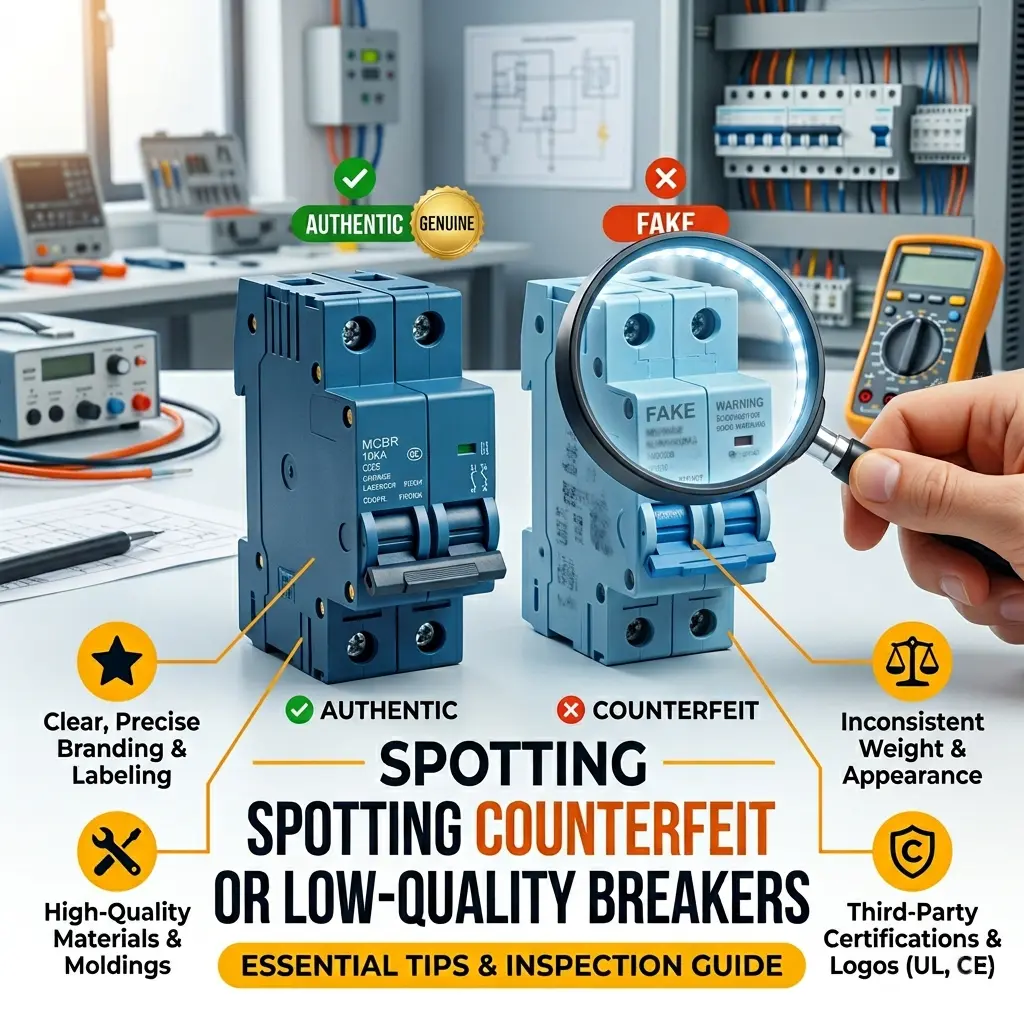
Procurement teams sometimes treat circuit breakers as generic commodities, opting for the cheapest option. Low-quality or counterfeit breakers frequently fail to trip during actual faults, destroying expensive downstream equipment and causing fires.
Ignoring Application Requirements
Installing a standard MCB where a motor-rated breaker (with a higher magnetic trip threshold) is required will result in constant nuisance tripping during motor startup. Precise load characteristics must dictate the tripping curve (Type B, C, or D).
Using AC Breakers in DC Systems
This is a catastrophic error. As previously established, an AC breaker cannot quench a DC arc. Using the wrong breaker type can lead to system failure and safety hazards, resulting in completely melted switchgear and uncontrollable electrical fires.
FAQ: Types of Circuit Breakers
1. What are the main types of low voltage circuit breakers?
MCB, MCCB, ACB, RCCB, RCBO, and DC circuit breakers.
2. What is the difference between MCB and MCCB?
MCCBs handle higher current and offer adjustable protection, whereas MCBs are for low-current applications with fixed trip settings.
3. Which breaker is used for EV charging?
RCBO, RCD (often Type B or A-EV), and DC breakers are commonly used to handle specific EV loads and leakage profiles.
4. Are DC breakers necessary?
Yes, for solar and EV systems, specialized DC breakers are strictly necessary to safely extinguish continuous DC electrical arcs.
5. Which breaker is best for home use?
MCB or RCBO depending on safety requirements; RCBOs provide superior localized protection against both overloads and life-threatening earth leakage.
Conclusion: Understanding Circuit Breaker Types
The world of low voltage electrical protection is diverse and highly specialized. We can summarize the landscape through three core pillars: categorization relies on design architecture (MCB, MCCB, ACB), targeted functionality (RCCB, RCBO), and operational application (residential, industrial, renewable energy). Every single breaker is engineered with a specific operational role in mind, and deviating from these intended roles compromises the entire electrical infrastructure. The correct selection directly dictates the safety, efficiency, and legal compliance of a system. Understanding different types of low voltage circuit breakers helps electricians and buyers select the right protection device for each application.