Key Takeaways
- Home Electrical Protection: Circuit breakers are the first line of defense against overloads, short circuits, and electrical fires in residential settings.
- Compliance & Safety: Proper sizing and selection (MCB, RCCB, RCBO) are critical for meeting local electrical codes and protecting end-users.
- System Layout: A well-designed distribution panel ensures balanced loads and isolates faults, preventing total system shutdowns.
Quick Answer: How Are Circuit Breakers Used in Homes?
Low voltage circuit breakers are used in residential electrical systems to protect circuits from overloads, short circuits, and electrical faults. They are installed in distribution boards to automatically disconnect power when unsafe conditions occur, ensuring safety and preventing damage to appliances and wiring. By acting as an automatic safety switch, a residential circuit breaker safeguards the structural integrity of the home’s wiring system while providing reliable power distribution for modern household demands.
What Is a Low Voltage Circuit Breaker in Residential Systems?
For electricians, electrical contractors, and B2B procurement specialists, understanding the precise role and classification of protective devices is fundamental to designing safe residential grids. A residential circuit breaker is an electromechanical device engineered to monitor electrical current and interrupt the circuit if the current exceeds safe operational thresholds.
What Does “Low Voltage” Mean in Home Electrical Systems?
In electrical engineering terminology, “low voltage” refers to systems operating at or below 1000V AC. In the context of home electrical systems, this typically translates to standard operational voltages of 120V or 240V, depending on regional grid standards (such as the split-phase systems common in North America or the 230V single-phase systems prevalent in Europe and Asia). Despite the term “low voltage,” these power levels are fully capable of causing severe electrocution or electrical fires if not properly managed by a certified low voltage circuit breaker.
What Does a Circuit Breaker Do in a House?
At its core, the primary function of these devices is risk mitigation and asset protection. A circuit breaker automatically interrupts electrical flow when it detects overload or short circuit conditions. Unlike traditional fuses that must be replaced after a single fault event, circuit breakers can be safely reset once the underlying issue has been resolved. This reusability makes them the standard for home electrical protection, offering convenience for the homeowner and reliable performance for the contractor.
Where Are Circuit Breakers Installed in Residential Electrical Systems?
The strategic placement of circuit breakers forms the architecture of a home’s electrical protection. A standardized layout ensures that faults are isolated without disrupting power to the entire property.
Main Distribution Panel (Breaker Panel)
The main distribution panel, often referred to as the breaker box, is the central hub of the home’s electrical system. Here, the primary feed from the utility grid enters the home. The main circuit breaker is located at the top or bottom of this panel, serving as the master switch that controls power to the entire property. It provides main incoming line protection, safeguarding the panel itself and the main feeder wires from massive overloads.
Branch Circuit Protection
Branch circuits radiate from the main distribution panel to supply power to specific areas and appliances. Each branch circuit is protected by its own dedicated circuit breaker. This localized protection includes:
- Socket Circuits: Providing power to general-use wall outlets.
- Lighting Circuits: Dedicated lines for overhead lighting and permanently installed fixtures.
- High-Load Circuits: Specialized circuits for kitchens, air conditioning units, electric water heaters, and electric stoves, which require breakers with higher amperage ratings.
Subpanels in Large Homes
In expansive residential properties or homes with detached structures (like garages or workshops), electrical contractors often install subpanels. Subpanels act as secondary distribution hubs, fed by a heavy-duty breaker in the main panel. They allow for efficient zone power distribution and handle long-distance loads, reducing voltage drop and simplifying circuit management for remote areas of the property.
What Types of Circuit Breakers Are Used in Homes?
Selecting the appropriate type of residential circuit breaker is critical for compliance and safety. Different faults require specific detection mechanisms.
MCB (Miniature Circuit Breaker)
The Miniature Circuit Breaker (MCB) is the most common device found in a residential distribution panel. Designed primarily for standard circuits, MCBs provide fundamental protection against overloads and short circuits. They utilize a bimetallic strip for thermal overload protection and an electromagnetic coil for instantaneous short-circuit tripping.
RCCB (Residual Current Circuit Breaker)
An RCCB is purely designed for earth leakage protection. It constantly monitors the balance of current between the live (phase) and neutral conductors. If it detects a mismatch—indicating that current is leaking to earth, potentially through a human body—it trips instantly. RCCBs are essential for shock prevention but must be paired with an MCB, as they do not protect against overloads or short circuits.
RCBO (Combined Protection Breaker)
The Residual Current Breaker with Overcurrent (RCBO) represents the gold standard in modern home electrical protection. It combines the functions of an MCB and an RCCB into a single unit. By offering both leakage and overcurrent protection, RCBOs ensure higher safety and easier fault diagnosis, as a trip only isolates the specific circuit experiencing the issue.
AFCI / GFCI Breakers (Regional Standards)
Depending on local electrical codes (such as the NEC in the United States), specific advanced breakers are mandated. Arc Fault Circuit Interrupters (AFCI) detect dangerous electrical arcing that can cause fires, while Ground Fault Circuit Interrupters (GFCI) operate similarly to RCCBs, providing vital anti-leakage protection in wet areas like kitchens, bathrooms, and outdoor receptacles.
How Do Circuit Breakers Protect Residential Electrical Systems?
Understanding the operational mechanics of a low voltage circuit breaker helps in appreciating its role in comprehensive home electrical protection.
Overload Protection in Home Circuits
An overload occurs when too many appliances are plugged into a single circuit, drawing more current than the wiring can safely handle over a prolonged period. The thermal mechanism within the breaker reacts to this gradual heat buildup, eventually bending and breaking the circuit before the wires can overheat and melt their insulation.
Short Circuit Protection
A short circuit is a massive, instantaneous surge of current caused by a direct fault between active conductors or an active conductor and the earth. The electromagnetic component of the breaker reacts to this sudden magnetic field spike, triggering a trip within milliseconds to prevent catastrophic damage or explosion.
Earth Leakage Protection
In damp or wet environments, the risk of current bypassing its intended path and traveling through moisture (or a person) increases dramatically. Leakage protection devices monitor these minuscule deviations and disconnect the power instantaneously, effectively preventing lethal electrocution.
Fire Prevention in Residential Wiring
Electrical fires are a leading cause of residential property damage. Proper circuit breaker selection significantly reduces electrical fire risks in homes. By ensuring that the breaker rating perfectly matches the wire gauge capacity, contractors guarantee that the breaker will trip long before the wiring reaches combustion temperatures.
Typical Residential Electrical System Layout with Circuit Breakers
For B2B suppliers and contractors, visualizing the electrical layout is crucial for panel design and component procurement. The structured flow of home electrical power follows a logical path to ensure safety at every stage.
Home electrical flow: Grid → Main breaker → Distribution panel → Branch breakers → Appliances
Example Circuit Allocation in a Home
Below is a standardized allocation chart demonstrating appropriate breaker sizing for common residential loads. This structured approach prevents nuisance tripping while maintaining strict safety margins.
| Circuit Type | Typical Breaker Size | Application Notes |
|---|---|---|
| Lighting | 10A / 15A | Handles standard LED or incandescent fixtures throughout the property. |
| Sockets (Receptacles) | 16A / 20A | General purpose outlets for televisions, computers, and small appliances. |
| Air Conditioner / Heat Pump | 20A – 40A | Dedicated circuit handling high inrush currents during compressor startup. |
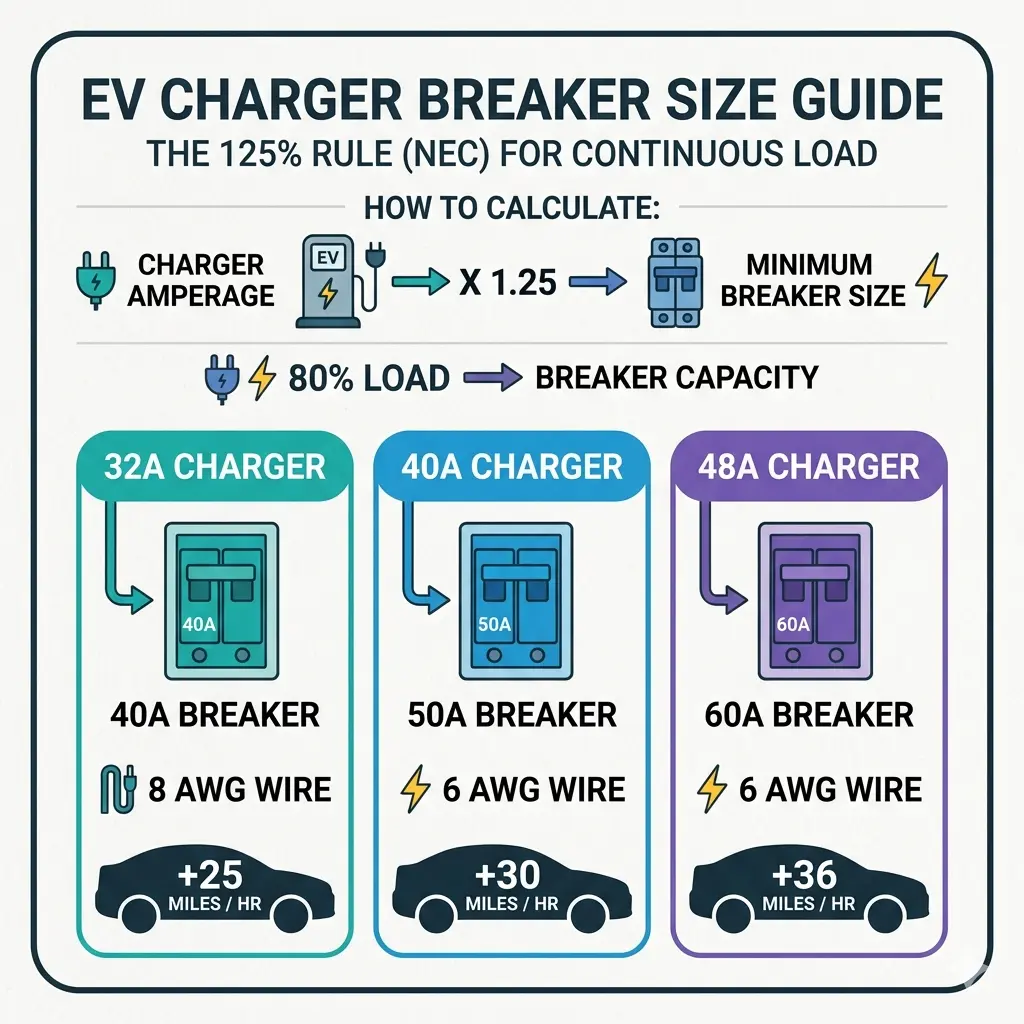
| EV Charger (Level 2) | 40A – 60A | Heavy-duty continuous load requiring appropriately gauged wiring. |
How to Choose the Right Circuit Breaker for a Residential System
Selecting the correct low voltage circuit breaker is not a one-size-fits-all process. Procurement teams and electricians must evaluate several technical parameters to ensure code compliance and optimal safety.
Key Factors for Breaker Selection
- Load Current: The continuous draw of the connected appliances must not exceed 80% of the breaker’s rating for continuous loads.
- Voltage Level: Ensure the breaker is rated for the correct system voltage (e.g., 120/240V).
- Wire Capacity: The most critical rule in home electrical protection: the breaker size must NEVER exceed the ampacity of the wire it protects.
- Safety Requirements: Determine if local codes require AFCI or GFCI capabilities for the specific room.
Standard Breaker Sizes in Residential Applications
Standardized sizing simplifies inventory for B2B distributors and installation for contractors. Typical ratings include 10A, 16A, 20A, 32A, and 40A. Each size corresponds to specific wire gauges to ensure thermal protection.
When to Use RCCB or RCBO in Homes
Specialized leakage protection is mandatory in environments with high safety requirements. RCCBs or RCBOs must be utilized in damp environments such as bathrooms, kitchens, laundry rooms, and outdoor installations. For premium builds, using RCBOs on every circuit guarantees that an earth fault on one line will not cause a total blackout.
Common Mistakes in Residential Circuit Breaker Installation
Even high-quality components can fail to provide adequate home electrical protection if installed incorrectly. Avoiding these professional pitfalls is essential for contractors aiming to deliver safe, reliable systems.
Using Incorrect Breaker Ratings
Installing a breaker that is too small for the load results in constant nuisance tripping. Conversely, installing a breaker that is too large for the wire gauge (e.g., putting a 30A breaker on a 14 AWG wire) creates a severe fire hazard, as the wire will melt before the breaker trips.
Not Installing Leakage Protection Devices
Failing to install RCCBs or GFCIs in required wet zones is a severe code violation and a massive safety hazard. Without earth leakage protection, the risk of fatal electric shocks increases exponentially in areas where water and electricity mix.
Overloading a Single Circuit
Connecting too many heavy-drawing devices (like space heaters, microwaves, and toasters) to a single 20A circuit is a common design flaw. A proper distribution panel design should segregate high-draw appliances onto dedicated circuits.
Poor Distribution Panel Design
Haphazard wiring, unbalanced loads across phases, and overcrowded panels can lead to excess heat buildup within the enclosure. A professionally designed distribution board features neatly routed wires, balanced phases, and adequate space for future expansions.
FAQ: Residential Circuit Breakers
What is the purpose of a circuit breaker in a house?
Circuit breakers protect electrical circuits by cutting off power when faults such as overload or short circuits occur, thereby preventing electrical fires and equipment damage.
What type of breaker is used in residential systems?
MCBs (Miniature Circuit Breakers) are most commonly used for basic circuit protection, along with RCCBs or RCBOs to provide additional safety against earth leakage and electric shocks.
Do homes need leakage protection?
Yes, leakage protection devices like RCCB or RCBO are essential for preventing electric shock, particularly in wet or damp areas like bathrooms and kitchens.
What size breaker is used in a home?
Typical sizes range from 10A to 40A, depending on the specific circuit. Lighting generally uses 10A to 15A, while heavy appliances require 20A, 30A, or 40A breakers.
Can I install a circuit breaker myself?
It is strictly recommended to have a licensed electrician install circuit breakers to ensure safety, proper load balancing, and compliance with local electrical codes.
Conclusion: Why Circuit Breakers Are Essential in Residential Systems
In summary, the low voltage circuit breaker stands as the absolute core of residential electrical safety. By offering reliable, instantaneous protection against overloads, short circuits, and potentially fatal earth leakage faults, these devices secure both the property and its inhabitants. For electricians, contractors, and B2B professionals, understanding the intricate details of circuit breaker selection, layout design, and proper installation is paramount. Ultimately, correctly designing and implementing home electrical protection with high-quality breakers not only guarantees regulatory compliance but significantly elevates the long-term safety, functionality, and reliability of the entire residential electrical infrastructure.