For electricians, facility managers, panel builders, and maintenance teams, ensuring the safety and reliability of electrical systems is paramount. One of the most critical and potentially dangerous issues encountered in electrical panels is a combination of a loose electrical connection and an overheating breaker terminal. This comprehensive guide maps the complete journey from fault and cause to risk, diagnosis, repair, and prevention, providing B2B professionals and technicians with actionable insights to maintain optimal switchboard operations.
What Causes Breaker Overheating and Loose Connection Problems?
Breaker overheating is commonly caused by loose terminals, corrosion, overloads, or improper torque connections. Identifying the exact heat source early helps prevent insulation failure and electrical fires.
Why Do Loose Breaker Terminals Generate Heat?
Loose electrical connections directly increase contact resistance. According to basic electrical principles, when current passes through a point of high resistance, it generates excessive heat under load. This localized heating can trigger a vicious cycle: thermal expansion occurs during peak load, followed by contraction as it cools. This thermal cycling gradually loosens the connection further, exacerbating the electrical hotspot until catastrophic failure occurs.
Can Corrosion Cause Breaker Overheating?
Yes. In damp or industrial environments, moisture and chemical exposure lead to conductor oxidation and corrosion. Oxidized layers on copper or aluminum act as insulators, significantly increasing contact resistance. This is especially problematic in facilities with atmospheric contaminants, where switchboard maintenance is critical to prevent overheating breaker terminals caused by degraded contact surfaces.
Does Overloading Look Similar to a Loose Connection?
While both scenarios result in a hot breaker, they manifest differently. An overload typically heats the entire breaker body evenly as the internal bimetallic strip reacts to excessive current. In contrast, a loose connection creates a distinct, localized electrical hotspot right at the terminal. Differentiating between the two requires careful observation and diagnostic tools.
| Symptom | Heat Pattern | Common Cause | Diagnostic Tool |
|---|---|---|---|
| Breaker trips frequently | Even heating across the breaker body | Excessive load on the circuit | Clamp Meter (measuring current) |
| Burning smell, terminal discoloration | Localized hotspot at the lug/terminal | Inadequate breaker terminal torque, thermal cycling | Infrared Thermal Imaging |
What Are the Signs of a Breaker Overheating Loose Connection?
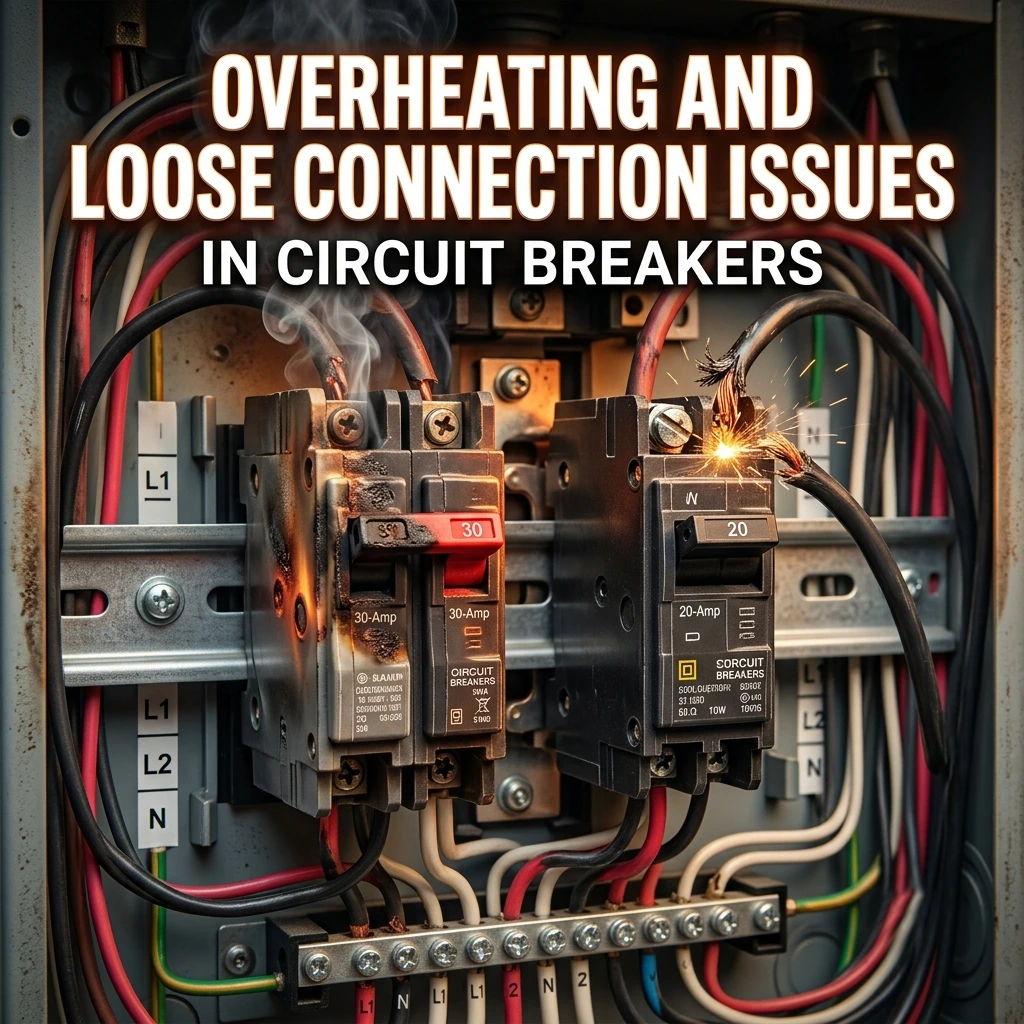
Signs of a loose breaker connection include a distinct burning smell, terminal discoloration (black or brown), flickering lights, and localized heat. Ignoring these signs can lead to severe insulation damage and fire risks.
What Does an Overheated Breaker Smell Like?
An overheating breaker emits a characteristic odor of melting plastic or a distinct acrid burning smell. This occurs as the excessive heat begins to degrade and carbonize the wire insulation and the breaker’s plastic casing.
Why Are Breaker Terminals Turning Black or Brown?
Discoloration at the terminals is a clear visual indicator of an electrical hotspot. The high temperatures cause the metal to oxidize rapidly and the surrounding insulation to scorch, leaving black or brown marks that indicate a history of severe overheating or micro-arcing.
Can Flickering Lights Indicate a Loose Breaker Connection?
Yes, flickering lights or unstable motor startups often indicate an intermittent connection. As the contact resistance fluctuates due to a loose terminal, voltage drops occur across the circuit, leading to erratic performance of connected equipment.
What Happens if a Loose Breaker Connection Is Ignored?
Ignoring a loose connection is highly dangerous. It leads to progressive insulation damage, increasing the likelihood of an arc fault. Ultimately, it can result in complete breaker failure, destruction of the electrical panel, and severe electrical fire hazards. Electrical fire prevention depends heavily on catching these signs early.
Breaker Overheating vs Overload — What Is the Difference?
Understanding the difference between an overload and a loose connection is crucial. Overloads cause generalized breaker heating and reliable tripping, whereas loose connections create extreme localized hotspots that may not trip the breaker immediately.
Thermal Overload Symptoms
In a thermal overload, the breaker behaves as designed. The breaker trip timing correlates with the full-load current behavior. You will notice a uniform temperature rise along the conductor and the breaker body, and the current draw will consistently exceed the breaker’s rated capacity.
Loose Connection Hotspot Symptoms
A loose connection produces uneven temperature distribution, characterized by a sharp electrical hotspot at the terminal. Terminal discoloration is common, and the heat may be intense enough to melt insulation even if the measured current is well below the breaker’s trip threshold.
How to Diagnose the Real Cause Quickly
To accurately diagnose the issue, professionals use a clamp meter to verify if the circuit is overloaded. Simultaneously, an IR thermal imaging camera can visualize heat patterns to confirm if the heat is localized at the terminal (indicating a loose connection) or uniform (indicating an overload). Finally, a torque inspection verifies mechanical tightness.
How to Troubleshoot Breaker Overheating and Loose Connections
Troubleshooting requires a systematic approach: visual inspection, torque verification, thermal imaging, load measurement, and checking for oxidation, ensuring compliance with industry standards.
Step 1 — Perform a Visual Inspection
Begin by de-energizing the panel if safe to do so. Look for terminal discoloration, melted insulation, and physically damaged or deformed terminals. Visual cues are often the first sign of a prolonged loose electrical connection.
Step 2 — Check Terminal Torque Values
Improper torque is a leading cause of connection failure. Using a calibrated torque screwdriver, verify that the breaker terminal torque matches the manufacturer torque specifications. Both under-torquing (causing looseness) and over-torquing (damaging the wire or terminal) must be avoided to adhere to professional standards like those outlined in NEC and IEC 60947.
Step 3 — Use Thermal Imaging to Detect Hotspots
Conduct an infrared thermal inspection under normal load conditions. This non-invasive method quickly identifies acceptable temperature rises versus dangerous localized hotspots, pointing directly to high contact resistance areas.
Step 4 — Measure Current and Load Balance
Use a power quality meter or clamp meter to check for phase imbalance, overload verification, and harmonic current issues. Ensure that the heating is not a byproduct of unexpected system loads.
Step 5 — Inspect for Corrosion or Oxidation
Check for conductor oxidation, particularly on older installations or aluminum wiring. Look for moisture ingress signs and ensure the switchboards are not contaminated by harsh environmental factors, which NFPA 70B highlights as a critical maintenance check.
| Symptom | Possible Cause | Recommended Action |
|---|---|---|
| Terminal Discoloration | Loose connection, micro-arcing | De-energize, clean, re-terminate, and torque to spec. |
| Breaker Body Hot, High Amperage | Circuit Overload | Redistribute loads or upgrade circuit capacity. |
| White/Green Powdery Residue | Conductor Oxidation / Corrosion | Apply anti-oxidant compound, replace damaged sections. |
How to Fix a Loose Connection in a Breaker Panel
Fixing a loose connection involves evaluating whether to retorque or replace the damaged components. Severely burned wires and compromised breakers must be replaced to guarantee electrical safety.
Should You Retighten or Replace the Breaker?
If a terminal has been overheating for a prolonged period, simply retightening is rarely sufficient. The heat alters the metallurgical properties of the terminal, causing it to lose its spring tension. If there is visible busbar overheating damage or the terminal thread is compromised, breaker replacement is strictly necessary.
How to Properly Retorque Electrical Connections
When re-establishing a connection, follow a strict torque sequence using calibrated tools. Ensure the conductor is seated correctly, and apply the exact torque specified by the manufacturer. Periodic maintenance should include checking these values to mitigate the effects of thermal expansion.
When Should Burned Wires Be Replaced?
If the insulation exhibits brittleness or there is severe copper discoloration indicating conductor annealing, the wire has lost its structural integrity. You must cut back the damaged wire to clean, uncompromised metal before re-terminating.
How to Prevent Breaker Overheating Problems
Preventive electrical maintenance, including regular thermal scanning and torque verification, is the most effective way to prevent loose connections, reduce downtime, and ensure safety compliance.
Why Preventive Maintenance Matters
Proactive switchboard maintenance reduces unexpected downtime and ensures safety compliance. By catching contact resistance increases early, facilities can avoid costly repairs and catastrophic failures.
How Often Should Breaker Connections Be Inspected?
Inspection frequency depends on the environment. High-current panels and those in high-vibration or heavy industrial environments require more frequent checks—often bi-annually—compared to standard commercial setups.
Can Thermal Scanning Prevent Electrical Fires?
Absolutely. Regular infrared thermal inspection allows for hotspot trend analysis, predicting failures before they occur. This predictive maintenance approach is vital for electrical fire prevention and is often required for insurance compliance.
Best Practices for Installing Breaker Connections
Ensure correct conductor stripping without nicking the wire. Maintain strict torque control, and always verify the compatibility of conductor materials (e.g., using proper lugs for aluminum) to prevent future loosening.
Aluminum vs Copper Conductors — Which Causes More Loose Connection Problems?
Aluminum conductors are more prone to loose connections due to higher thermal expansion rates and rapid oxidation compared to copper. Proper termination techniques and anti-oxidant compounds are essential for aluminum wiring.
Aluminum Expansion and Oxidation Issues
Aluminum expands and contracts significantly more than copper during thermal cycling, which easily leads to loosened terminals over time. Furthermore, bare aluminum oxidizes rapidly, forming a highly resistive layer that generates intense heat.
Copper Conductivity and Stability
Copper is more stable, has lower thermal expansion, and is less susceptible to resistive oxidation, making it less prone to connection degradation under normal conditions.
Anti-Oxidant Compounds and Proper Terminations
When using aluminum, it is mandatory to wire brush the conductor and immediately apply an anti-oxidant compound. Terminals must be rated for aluminum (AL/CU) to ensure safe and durable connections.
| Property | Copper | Aluminum | Maintenance Note |
|---|---|---|---|
| Thermal Expansion | Low | High | Aluminum requires more frequent torque checks. |
| Oxidation Resistance | High (oxide is conductive) | Low (oxide is an insulator) | Always use anti-oxidant paste on aluminum. |
| Connection Stability | Excellent | Prone to loosening | Ensure dual-rated (AL/CU) lugs are used for aluminum. |
FAQ — Breaker Overheating Loose Connection
Quick answers to common questions regarding electrical panel overheating, safety risks, and maintenance best practices for loose connections.
Can a Loose Breaker Connection Cause a Fire?
Yes. Loose electrical connections generate high contact resistance and localized heat. Over time, this heat melts insulation and can trigger an arc fault, posing a severe electrical fire risk.
Why Is My Breaker Hot but Not Tripping?
A breaker gets hot without tripping typically because of a loose connection at the terminal creating an electrical hotspot, not an overload. The current isn’t high enough to trip the breaker, but the resistance generates dangerous heat.
How Hot Is Too Hot for a Circuit Breaker?
Generally, breakers should not exceed 140°F (60°C) at the terminals. If a terminal is significantly hotter than adjacent ones or cannot be touched safely, it requires immediate professional inspection.
Should Breaker Screws Be Retightened Periodically?
Yes, as part of preventive electrical maintenance. Thermal expansion and environmental vibrations can cause screws to loosen over time. Always use a torque screwdriver to meet manufacturer specifications.
Can Vibration Loosen Breaker Terminals?
Absolutely. In industrial settings with heavy machinery, constant vibration is a primary cause of loosened breaker terminals, necessitating more frequent maintenance and torque verification.
What Is the Safe Temperature Range for Breakers?
Most standard breakers operate safely up to an ambient temperature of 104°F (40°C), with terminal temperatures not exceeding 60°C to 75°C depending on the equipment rating and standards.