Key Takeaways
- Optimized Safety: Selecting the best circuit breaker for home applications requires matching the device type (MCB, RCCB, RCBO) to specific load profiles and environmental risks.
- Professional Compliance: Electricians and B2B procurement teams must ensure all selected residential electrical panel breakers meet strict local codes, such as integrating leakage protection in wet zones.
- System Reliability: Advanced solutions like RCBOs are becoming the industry standard, offering superior home circuit protection by combining overcurrent and earth leakage safeguards in a single unit.
Quick Answer: What Are the Best Circuit Breakers for Home Panels?
The best circuit breakers for home electrical panels are MCB for standard circuits, RCBO for combined protection, and RCCB for leakage protection. The right choice depends on the load type, safety requirements, and local electrical standards.
For electrical contractors and systems integrators, specifying the correct components is the bedrock of system reliability. A residential electrical panel is not a one-size-fits-all environment. While basic lighting may only require standard overcurrent protection, high-moisture areas and heavy-duty appliances demand specialized interrupting capabilities. By understanding the distinct advantages of each breaker category, procurement teams can source the most effective hardware to ensure long-term home circuit protection and minimize liability.
What Does a Circuit Breaker Do in a Home Electrical Panel?
At a fundamental level, the home electrical panel serves as the central nervous system of a residence, distributing incoming power from the utility grid to various branch circuits. The circuit breakers housed within this panel act as the primary safety gatekeepers, monitoring the flow of electricity and intervening when dangerous anomalies occur.
Why Circuit Breakers Are Essential for Residential Safety
Circuit breakers protect home electrical systems by automatically disconnecting power during overloads, short circuits, or leakage faults. Without these critical devices, an excessive current draw from too many appliances could overheat the internal wiring, degrading insulation and ultimately causing catastrophic electrical fires. Furthermore, they protect human life by instantaneously interrupting power when a direct short or ground fault is detected, ensuring that electrical energy is safely contained within its intended conductive path. For contractors, reliable breakers represent the difference between a compliant, safe installation and a massive safety hazard.
Where Are Circuit Breakers Installed in Home Panels?
Proper spatial and functional organization within the distribution board is necessary for efficient fault isolation. Circuit breakers are typically installed in three primary configurations:
- Main Breaker: Positioned at the point where utility power enters the panel, this large-capacity breaker controls the entire power supply to the residence. It protects the main feeder wires and provides a single point of disconnect for whole-house emergencies or maintenance.
- Branch Circuit Breakers: These are the individual breakers lining the panel, each dedicated to a specific zone or appliance (e.g., kitchen outlets, bedroom lighting, HVAC systems). They ensure that a localized fault only trips the affected circuit, leaving the rest of the home powered.
- Subpanel Breakers: In larger properties or estates with detached structures (like workshops or guest houses), a heavy-duty breaker in the main panel feeds a secondary distribution board. This subpanel then houses its own set of branch breakers to manage localized loads efficiently.
What Types of Circuit Breakers Are Best for Home Electrical Panels?
Navigating the procurement of residential electrical panel breakers requires a deep understanding of device typologies. Modern electrical codes require a layered approach to home circuit protection, utilizing different breaker mechanisms to address distinct electrical hazards.
MCB (Miniature Circuit Breaker) for Standard Home Circuits
The Miniature Circuit Breaker (MCB) is the most ubiquitous component in residential panels. Engineered primarily for standard indoor circuits, MCBs deliver essential protection against thermal overloads and instantaneous short circuits. They are highly reliable, cost-effective, and perfectly suited for general lighting and dry-area receptacle circuits. Their modular design allows electricians to populate standard DIN rails efficiently.
RCCB (Residual Current Circuit Breaker) for Leakage Protection
While MCBs protect wiring, Residual Current Circuit Breakers (RCCBs) protect people. An RCCB constantly monitors the current balance between the live and neutral conductors. If a discrepancy is detected—signifying that current is “leaking” to the earth, potentially through a person—the RCCB trips in milliseconds. This pure anti-shock mechanism is mandatory for circuits supplying wet or high-risk environments, such as bathrooms, kitchens, laundry rooms, and outdoor outlets.
RCBO (Combined Breaker) for Maximum Safety
For those seeking the ultimate in residential safety and streamlined panel design, the Residual Current Breaker with Overcurrent (RCBO) is the premier choice. RCBO combines overcurrent and leakage protection in one device, making it one of the safest options for residential systems. By integrating the thermal-magnetic trip unit of an MCB with the earth-fault detection of an RCCB, the RCBO ensures that every individual circuit is comprehensively protected. This localized protection means an earth fault will only trip the specific circuit, rather than blacking out an entire floor.
AFCI / GFCI Breakers (Regional Applications)
Depending on regional compliance standards (such as the NEC in North America), contractors may be required to install specialized advanced breakers:
- AFCI (Arc Fault Circuit Interrupter): Designed to detect hazardous electrical arcing (sparking) caused by damaged wires or loose connections, serving as a primary defense against electrical fires in bedrooms and living areas.
- GFCI (Ground Fault Circuit Interrupter): Functionally similar to an RCCB, providing critical earth leakage protection in damp and wet locations.
How to Choose the Best Circuit Breaker for a Home Electrical Panel
For B2B buyers and professional electricians, selecting the best circuit breaker for home installations is an exact science. It is not merely about fitting a device into a slot; it involves rigorous load calculations and adherence to technical specifications to guarantee system integrity.
Key Factors to Consider
- Rated Current (Amps): The continuous current capacity the breaker can handle without tripping. It must precisely match the ampacity of the downstream wiring.
- Voltage: The operational voltage rating must align with the residential grid (typically 120V/240V in North America or 230V in Europe/Asia).
- Breaking Capacity: Often rated in kiloamps (kA), this dictates the maximum short-circuit fault current the breaker can safely interrupt without being destroyed. Standard home use typically requires 4.5kA to 6kA breaking capacity.
- Application Type: Determining the nature of the load (e.g., resistive lighting vs. inductive motor loads) helps in selecting the correct tripping curve (Curve B or Curve C).
Matching Breakers to Different Home Circuits
Proper circuit allocation is vital for preventing nuisance tripping and ensuring robust home circuit protection. The following table illustrates professional standard pairings:
| Circuit Type | Recommended Breaker Type & Size | Application & Sizing Rationale |
|---|---|---|
| Lighting | 10A – 15A MCB | Low continuous draw; protects standard 1.5mm² or 14 AWG wiring. |
| Socket Outlets | 16A – 20A MCB / RCBO | Handles standard plug-in appliances; RCBO recommended for wet zones. |
| Air Conditioner | 20A – 40A Breaker (Curve C) | Requires higher amperage and delayed trip for high inrush motor startup. |
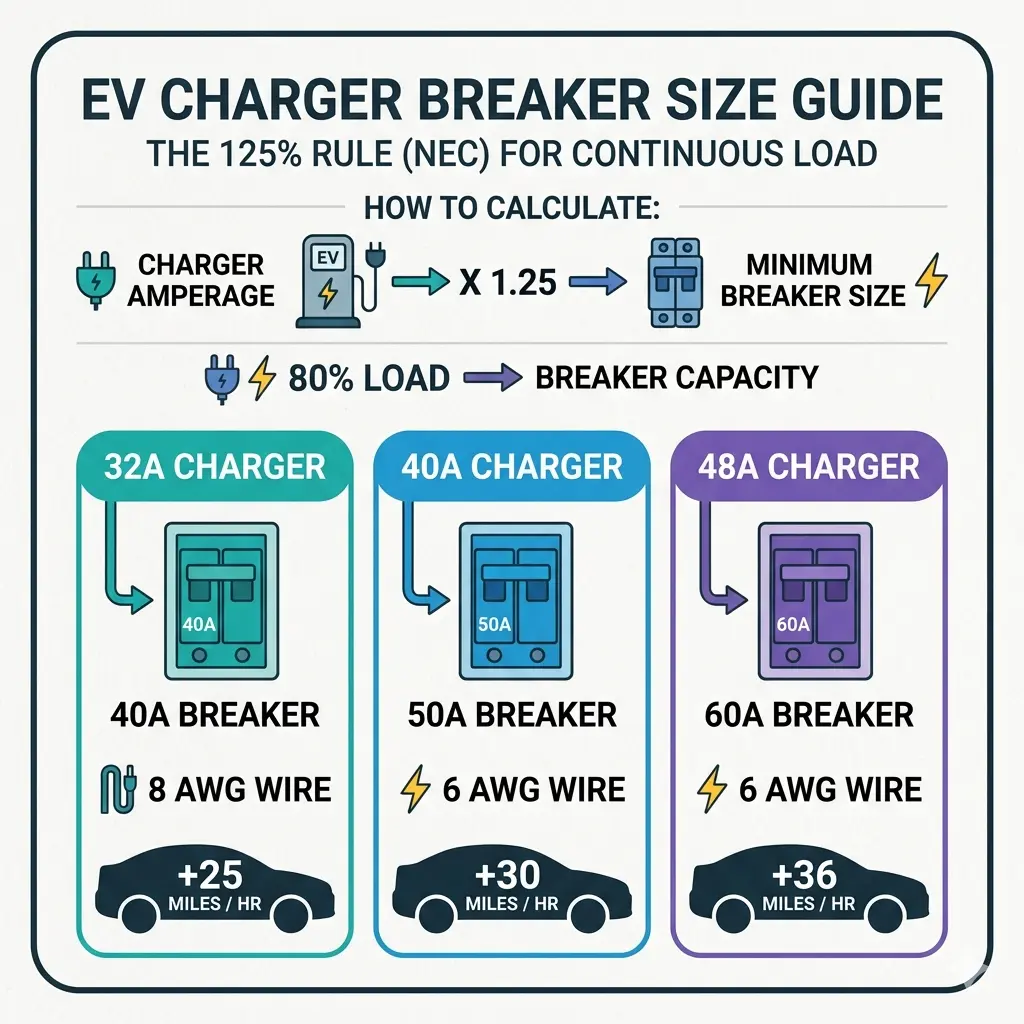
| EV Charger | 40A – 60A Breaker | Heavy continuous load demanding dedicated, high-capacity overcurrent protection. |
When Should You Use RCBO Instead of MCB?
An RCBO should strictly replace an MCB in scenarios with high safety requirements, particularly where the risk of electric shock is elevated. If a circuit services a bathroom, an outdoor garden, or a kitchen countertop, the leakage protection of an RCBO is non-negotiable. Furthermore, in premium residential builds where system reliability is paramount, utilizing RCBOs across the entire board prevents the inconvenience of shared-neutral RCCB nuisance tripping.
MCB vs RCCB vs RCBO: Which Is Best for Home Use?
A common dilemma for procurement teams and junior electricians is deciding the precise mix of MCBs, RCCBs, and RCBOs for a panel layout. Understanding their comparative advantages is critical for cost-effective, compliant panel design.
MCB vs RCCB: What Is the Difference?
The distinction lies entirely in their protective scope. An MCB acts as a shield for the infrastructure, cutting power only when the system draws too much current (overload) or when wires short out. An RCCB acts as a shield for the user, ignoring overloads entirely but tripping instantly if a fraction of an amp leaks to earth. Because an RCCB cannot stop an overload fire, it must ALWAYS be installed in series with an MCB.
RCBO vs MCB: Why Combine Protection?
While an MCB is cheaper, it lacks earth-fault capabilities. By upgrading to an integrated solution, contractors can deliver superior value and safety. RCBO provides both overload and leakage protection, reducing the need for multiple devices. This consolidation saves valuable DIN rail space inside the distribution panel, drastically reduces installation wiring time, and makes future fault diagnosis significantly easier for maintenance personnel.
Which Option Is Best for Modern Homes?
The decision often comes down to budget versus optimal performance.
- The Base Standard: A split-load board utilizing multiple MCBs grouped under a single, shared RCCB. This is cost-effective but means a single earth fault will black out multiple circuits simultaneously.
- The High-End Standard: An all-RCBO panel layout. While the initial component cost is higher for the B2B buyer, it offers the ultimate in reliability, safety, and user convenience, making it the preferred choice for modern luxury homes and rigorous compliance environments.
Learn More: MCB vs MCCB in Solar Systems: What Is the Difference and Which One Should You Use?
Recommended Circuit Breaker Configuration for Home Panels
Designing the layout of residential electrical panel breakers is an exercise in logic and safety engineering. A structured hierarchy ensures power is distributed securely and efficiently.
Typical Residential Panel Setup
A compliant distribution panel begins with a robust Main Breaker acting as the primary isolator. From there, power buses distribute electricity to individual protection devices. In traditional layouts, power flows through a high-capacity RCCB before reaching a bank of Branch MCBs, which then feed the end-use appliances.
Example Layout for a Modern Home
For clarity in system design, contractors can deploy one of two primary architectural flows:Traditional Setup: Main breaker → RCCB (Group Protection) → MCB branch circuits
Applicability: Best suited for budget-conscious projects or standard tract housing where cost efficiency is prioritized over granular fault isolation.Advanced Setup: Main breaker → RCBO dedicated branch circuits
Applicability: The optimal solution for high-end residential projects, smart homes, and environments demanding the highest degree of home circuit protection. If the bathroom circuit leaks, only the bathroom RCBO trips, leaving the kitchen and bedroom fully operational.
Common Mistakes When Choosing Circuit Breakers for Home Panels
Even with the best circuit breakers for home applications at your disposal, poor engineering and procurement errors can fatally compromise the system. Electricians and B2B buyers must actively avoid these critical pitfalls.
Choosing the Wrong Breaker Size
Oversizing a breaker is one of the most dangerous errors in the electrical trade. If a contractor pairs a 30A breaker with 14 AWG wire (which is only rated for 15A), the wire will overheat and potentially combust long before the breaker detects an overload. Conversely, undersizing the breaker leads to persistent nuisance tripping, frustrating the homeowner and degrading the breaker’s internal contacts over time.
Ignoring Leakage Protection
Attempting to cut costs by utilizing only MCBs across the entire board, while neglecting RCCBs or RCBOs, is a severe violation of modern electrical codes. Failing to provide earth leakage protection in kitchens, bathrooms, basements, and outdoor areas leaves occupants highly vulnerable to fatal electrocution in the event of an appliance fault.
Overloading Circuits
A common design flaw is allocating too many high-draw appliances (e.g., microwaves, space heaters, kettles) to a single branch circuit. This poor panel design ensures the breaker will operate near its maximum thermal limit continuously, leading to premature failure and system unreliability.
Using Low-Quality Breakers
Procurement teams might be tempted by uncertified, knock-off components to lower project costs, but the risks are astronomical. Low-quality breakers may fail to trip properly, increasing safety risks. A breaker that refuses to open its contacts during a massive short circuit can cause panel explosions, severe fires, and total system destruction. B2B buyers must always source hardware from reputable, certified manufacturers with proven testing documentation.
FAQ: Best Circuit Breakers for Home Electrical Panels
What is the best type of circuit breaker for a home?
While the MCB is the most common for basic circuits, the RCBO is widely considered the absolute best type for modern homes because it provides complete, individualized protection against overloads, short circuits, and earth leakage all in one unit.
Should I use RCBO or RCCB in my home?
You should prioritize RCBOs for dedicated, individual circuit protection. RCCBs are acceptable when used to protect a group of MCBs, but RCBOs are far superior as they isolate faults to a single circuit, preventing widespread power outages in the home.
What size breaker is used in a home panel?
Home panels utilize a range of sizes to match specific loads. Common sizes include 10A to 15A for lighting, 16A to 20A for general socket outlets, and larger 30A, 40A, or 60A breakers for heavy appliances like air conditioners, ovens, and EV chargers.
Do I need a main breaker in my electrical panel?
Yes, a main breaker is an absolute necessity. It serves as the master disconnect switch for the entire residence and protects the main feeder cables entering the property from experiencing catastrophic overloads.
Are expensive circuit breakers worth it?
Absolutely. High-quality, certified breakers from reputable brands are strictly calibrated, utilize superior internal materials, and guarantee reliable tripping during emergencies. Investing in premium breakers is a low-cost insurance policy against devastating electrical fires.
Conclusion: Choosing the Best Circuit Breaker for Your Home
In conclusion, guaranteeing robust home circuit protection requires a meticulous, well-informed approach to panel design. The best circuit breaker for home environments is not a single product, but an intelligent combination of technologies tailored to specific risks. Different circuits inherently require different types of protection; standard rooms may rely on cost-effective MCBs, while hazardous, wet areas demand the life-saving leakage detection of RCCBs.
However, for electrical contractors and B2B buyers looking to maximize safety and system reliability, the industry trend is clear: the RCBO represents the safest, most efficient standard for modern residential electrical panel breakers. By embracing proper sizing, prioritizing leakage protection, and insisting on high-quality components, professionals ensure that the electrical systems they install will deliver unwavering safety, regulatory compliance, and long-term stability for end-users. Correct selection upfront eliminates hazards down the line, cementing the integrity of every project.