For electricians, facility maintenance teams, and contractors, dealing with a residual current breaker tripping unexpectedly can be a frustrating and time-consuming challenge. Understanding the underlying mechanisms of these earth leakage faults is essential for ensuring both human safety and the continuous operation of critical electrical systems in residential, commercial, and industrial environments.
Quick Answer: Why Does an RCCB (RCD) Trip Without a Real Fault?
RCCB false tripping happens when the device detects small or transient leakage currents that do not represent a dangerous fault. These can be caused by normal electronic device leakage, wiring issues, neutral-earth faults, or electrical noise in the system.
When investigating RCD nuisance tripping, it is vital to approach the electrical network methodically, examining both the fixed wiring and the characteristics of the connected loads to identify the root cause of the unexpected disconnections.
What Is RCCB False Tripping?
Definition of RCCB False Tripping
To establish a foundational understanding, we must define the exact nature of this phenomenon. RCCB false tripping refers to unintended disconnection of a circuit when leakage current exceeds the device’s sensitivity threshold without an actual hazardous fault. This means that the protection device is operating exactly as designed mechanically, but it is reacting to cumulative or transient conditions rather than a genuine electrical shock hazard or catastrophic insulation failure.
Why RCCBs Are Sensitive by Design
The standard 30mA protection level is strictly mandated by modern electrical codes as a fundamental human safety requirement. At this level, the device can prevent ventricular fibrillation if a person comes into contact with live electrical parts. Because they are engineered to save lives, RCCBs are intentionally sensitive to protect against electric shock, which makes them vulnerable to nuisance trips when exposed to minor irregularities in the power supply or connected loads.
How RCCBs Work: Residual Current Detection Principle
What Is Residual Current?
In a perfectly healthy single-phase circuit, the current flowing out through the live (phase) conductor should exactly equal the current returning through the neutral conductor. Residual current is the imbalance between live and neutral conductors in a circuit. When a portion of the current finds an alternative path to earth—whether through a person, a faulty appliance casing, or parasitic capacitance—this equilibrium is disrupted.
How the RCCB Detects Leakage
The internal mechanism of an RCCB relies on a highly sensitive zero-sequence current transformer. Both the live and neutral wires pass through the core of this transformer. Under normal conditions, the opposing magnetic fields generated by the live and neutral currents cancel each other out. If a leakage path develops, an imbalance detection occurs, inducing a voltage in the transformer’s secondary winding. When the imbalance exceeds the rated threshold, the RCCB trips to isolate the circuit.
Common Causes of RCCB False Tripping
Accumulated Leakage from Multiple Devices
In modern installations, a single circuit often supplies power to numerous electronic appliances. Each of these devices, particularly IT equipment like computers and servers, has inherent, perfectly normal leakage currents (often around 1mA to 2mA per device) due to internal EMC filters. Multiple small leakage currents from devices can accumulate and trigger RCCB tripping, an effect commonly referred to as the electronics leakage sum.
Neutral-Earth Wiring Faults
Installation errors frequently manifest as a neutral-earth fault. If the neutral conductor accidentally makes contact with the earth conductor downstream of the RCCB, it creates a parallel path for return currents. Incorrect neutral-to-earth connections are one of the most common causes of RCCB nuisance tripping, as load current will split between the neutral and earth, instantly creating a residual current imbalance.
Insulation Degradation
Over time, the integrity of wiring insulation can deteriorate. An insulation resistance fault often develops due to aging cables, thermal stress, or moisture ingress in conduits and outdoor junction boxes. Even microscopic cracks in the insulation can allow tiny currents to leak to the surrounding grounded metalwork or damp masonry, especially during periods of high humidity.
High Inrush or Switching Transients
Inductive and capacitive loads can cause brief, highly asymmetrical current spikes when initially energized. Heavy-duty motors and large transformers are notorious for drawing massive inrush currents that can temporarily saturate the RCCB’s current transformer, tricking the imbalance detection mechanism into falsely identifying a fault condition.
Electrical Noise and EMI Interference
Industrial and commercial environments are saturated with high-frequency noise. EMI interference RCD tripping is a growing concern for facility teams. Modern electronic devices and VFDs can generate high-frequency leakage currents that affect RCCB stability. Variable Frequency Drives (VFDs), in particular, create steep voltage pulses that cause capacitive leakage currents to flow to earth through motor cables.
Shared Neutral Circuits
When electricians attempt to save on wiring, they might use a shared neutral across multiple circuits protected by different RCCBs. This creates a multi-circuit imbalance. The return current from a load on one phase might return via a neutral associated with a different RCCB, causing an immediate trip the moment the load is switched on.
RCCB Sensitivity Levels: 10mA vs 30mA vs 100mA
Proper system design requires selecting the appropriate leakage current sensitivity. Using an overly sensitive device in the wrong environment guarantees operational downtime.
| Sensitivity | Application | Risk of False Tripping |
|---|---|---|
| 10mA | High safety zones (hospitals, schools, wet areas) | High |
| 30mA | Residential / standard protection | Medium |
| 100mA / 300mA | Industrial / fire protection / equipment protection | Low |
Why 30mA Is the Industry Standard
The 30mA threshold is universally recognized in wiring regulations across the globe. 30mA RCCBs provide a balance between human safety and system stability. It is sensitive enough to prevent lethal electrical shocks but robust enough to ignore the minor leakage currents typical of a standard household or small commercial environment.
RCCB vs RCBO: Which Reduces False Tripping Better?
What Is the Key Difference?
It is crucial for B2B buyers and panel builders to understand the functional distinctions between protection devices. An RCCB provides leakage protection only; it must be paired with an MCB for overload and short-circuit protection. An RCBO, however, combines both leakage and overcurrent protection in a single unit.
Why RCBO Performs Better in Complex Systems
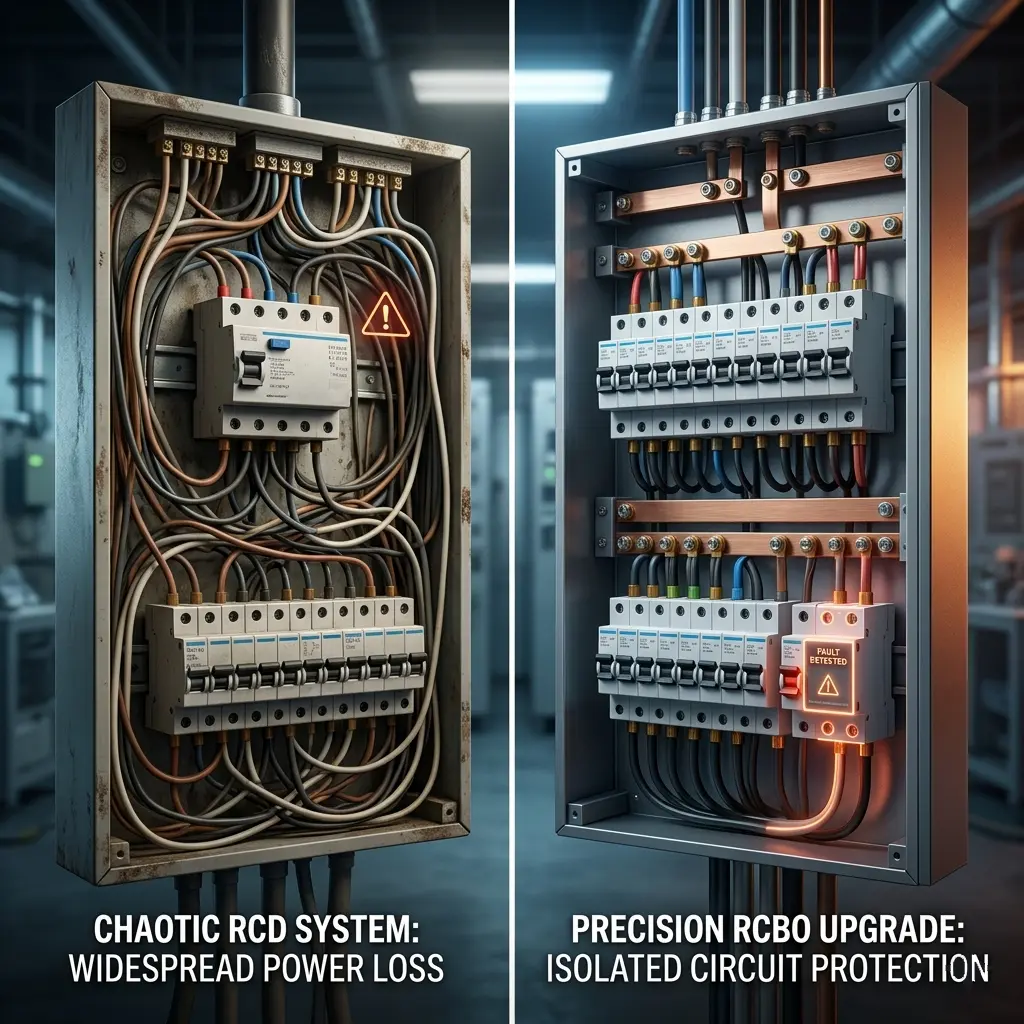
When a single RCCB covers multiple MCBs (a split-load board), the leakage from all those circuits accumulates. RCBO reduces nuisance tripping by isolating faults at individual circuits rather than whole systems. If a fault occurs on a specific lighting or power circuit, only that dedicated RCBO trips, leaving the rest of the electrical installation fully operational.
How to Diagnose RCCB False Tripping Step by Step
Step 1: Isolate Circuits
Begin by turning off all MCBs downstream of the affected RCCB. Gradually switch them back on one by one. If the RCCB trips when a specific MCB is engaged, you have successfully narrowed down the location of the earth leakage faults. You must divide load groups effectively to pinpoint the offending circuit.
Step 2: Test Insulation Resistance
Using a megohmmeter (insulation resistance tester), test the wiring of the isolated circuit (ensuring all sensitive electronics are unplugged first). Low insulation resistance is a primary indicator of leakage-related tripping. A reading below 1 Megohm generally indicates compromised insulation or moisture ingress that must be addressed.
Step 3: Check Neutral and Earth Separation
Verify that the neutral and earth bars in the distribution board are completely isolated from one another. Perform a continuity test between neutral and earth on the load side of the disconnected RCCB to ensure there are no downstream cross-connections or pinched wires in back boxes.
Step 4: Identify High-Leakage Devices
Inspect the loads connected to the problematic circuit. Look specifically for devices known to produce high natural leakage, such as VFDs, large SMPS power supplies, or older appliances with heating elements (like water heaters and commercial ovens) where insulation often degrades thermally.
Step 5: Measure Actual Leakage Current
Use a highly accurate earth leakage clamp meter clamped around both the live and neutral conductors simultaneously. This will measure the exact residual current imbalance present in the circuit during normal operation, allowing you to determine if the tripping is due to a genuine fault or cumulative background leakage.
How to Prevent RCCB False Tripping
Improve Wiring Layout
Proper electrical design is the first line of defense. Electricians must avoid shared neutrals at all costs when designing RCD-protected circuits. Ensure that each circuit has a dedicated live and neutral pair originating from the same protection device.
Use Proper Circuit Segmentation
Do not overload a single RCCB with too many electronic loads. Dividing circuits reduces cumulative leakage current that can trigger RCCBs. Distribute computers, lighting ballasts, and heavy appliances across multiple RCDs or utilize individual RCBOs to keep the standing leakage current well below the tripping threshold.
Upgrade to RCBO Where Needed
For critical infrastructure, such as server rooms, medical facilities, or industrial control panels, replace standard RCDs with RCBOs. The initial hardware investment is higher, but the elimination of localized nuisance tripping provides immense value in reliability.
Use Filters for EMI-Heavy Equipment
When installing Variable Frequency Drives or large switching power supplies, utilize specialized EMI filters and proper VFD cables with symmetric grounding. Installing VFD filters and ensuring low-impedance earth connections can significantly suppress the high-frequency noise that confuses standard RCD core transformers.
Select Correct RCCB Type (AC / A / B)
Using an obsolete Type AC RCD in a modern environment is a recipe for disaster. Different RCCB types are designed to handle different waveform characteristics of leakage current. Type A devices are required for circuits with pulsating DC components (common in modern electronics), while Type B devices are essential for three-phase drives, EV chargers, and solar inverters that can produce smooth DC leakage currents.
Common Mistakes That Cause RCCB Tripping Issues
Using One RCCB for Too Many Circuits
Contractors often attempt to save panel space by routing an entire floor’s power through one 30mA RCCB. This almost guarantees that the cumulative leakage will cause instability and random disconnections.
Ignoring Electronic Load Leakage
Failing to account for the internal filters of IT equipment. A circuit with 20 desktop computers may naturally leak 30mA, causing the breaker to trip continuously without any actual wiring fault present.
Mixing Neutral Conductors
Borrowing a neutral from a different circuit during renovations or additions. This immediately creates an imbalance and guarantees a trip.
Using Wrong RCCB Type for Modern Loads
Installing Type AC breakers for modern appliances like washing machines and LED lighting arrays, which require at least Type A protection to function without nuisance tripping and to ensure they trip when a real fault occurs.
RCCB False Tripping in Real Applications
Residential Systems
In homes, false tripping usually stems from outdoor lighting affected by rain, or the appliances accumulation effect where washing machines, refrigerators, and computer equipment collectively exceed the 15mA to 30mA threshold of the main house RCD.
Industrial Systems
Industrial environments with VFDs and automation systems are more prone to leakage-related tripping. The massive inductive loads, combined with harmonic distortion and high-frequency switching, require robust grounding architectures and highly specialized Type B or Type F RCDs.
Commercial Buildings
In offices and commercial spaces, large HVAC systems and elevators frequently cause transients that trip standard breakers. Facility managers often must retrofit these panels with time-delayed (Type S) RCDs or re-segment the distribution boards to isolate the mechanical loads from standard office power circuits.
FAQ: RCCB False Tripping
Why does my RCCB trip randomly?
Due to cumulative leakage or wiring faults. Random tripping often coincides with moisture ingress, transient spikes from the grid, or the simultaneous powering on of several electronic devices.
Can appliances cause RCCB tripping?
Yes, especially electronic devices with natural leakage. Devices containing heating elements, motors, or internal EMI filters naturally leak small amounts of current to earth.
Is RCCB tripping always a fault?
Not always; it may be nuisance tripping. The device might be operating correctly by detecting an imbalance, but that imbalance may be caused by normal operational characteristics of the load rather than a dangerous shock hazard.
How do I stop RCCB from tripping?
Identify leakage sources or use RCBOs. You must systematically test the insulation, measure the standing leakage current, fix any neutral-earth faults, and segment the circuits to reduce cumulative leakage.
What is the most common cause of RCCB false tripping?
Neutral-earth faults and accumulated leakage. Poor wiring practices and the modern proliferation of IT equipment are the leading culprits encountered by electricians today.
Conclusion: Understanding and Preventing RCCB False Tripping
In summary, resolving residual current breaker tripping requires a comprehensive understanding of both the protection device and the electrical loads it serves. It is critical to remember that RCCB false tripping is usually caused by small leakage accumulation or wiring issues rather than catastrophic hardware failure. As the electrical landscape evolves, modern electronic loads increase sensitivity issues, making traditional single-RCD distribution boards obsolete. To ensure optimal uptime and safety, correct design and segmentation are key.
RCCB false tripping occurs when cumulative or transient leakage currents trigger the device’s safety threshold, and it can be reduced through proper wiring design, load segmentation, and selecting the appropriate protection device type.
For contractors, panel builders, electrical distributors, and facility maintenance teams, now is the time to evaluate your current protection design and procurement specifications. Upgrading your distribution panels to utilize RCBOs, implementing correct RCD types (Type A or B), and adopting stringent wiring practices will drastically reduce maintenance call-backs and guarantee a more reliable, safer electrical infrastructure for your clients and facilities.