Quick Answer: Single Phase vs Three Phase Breakers
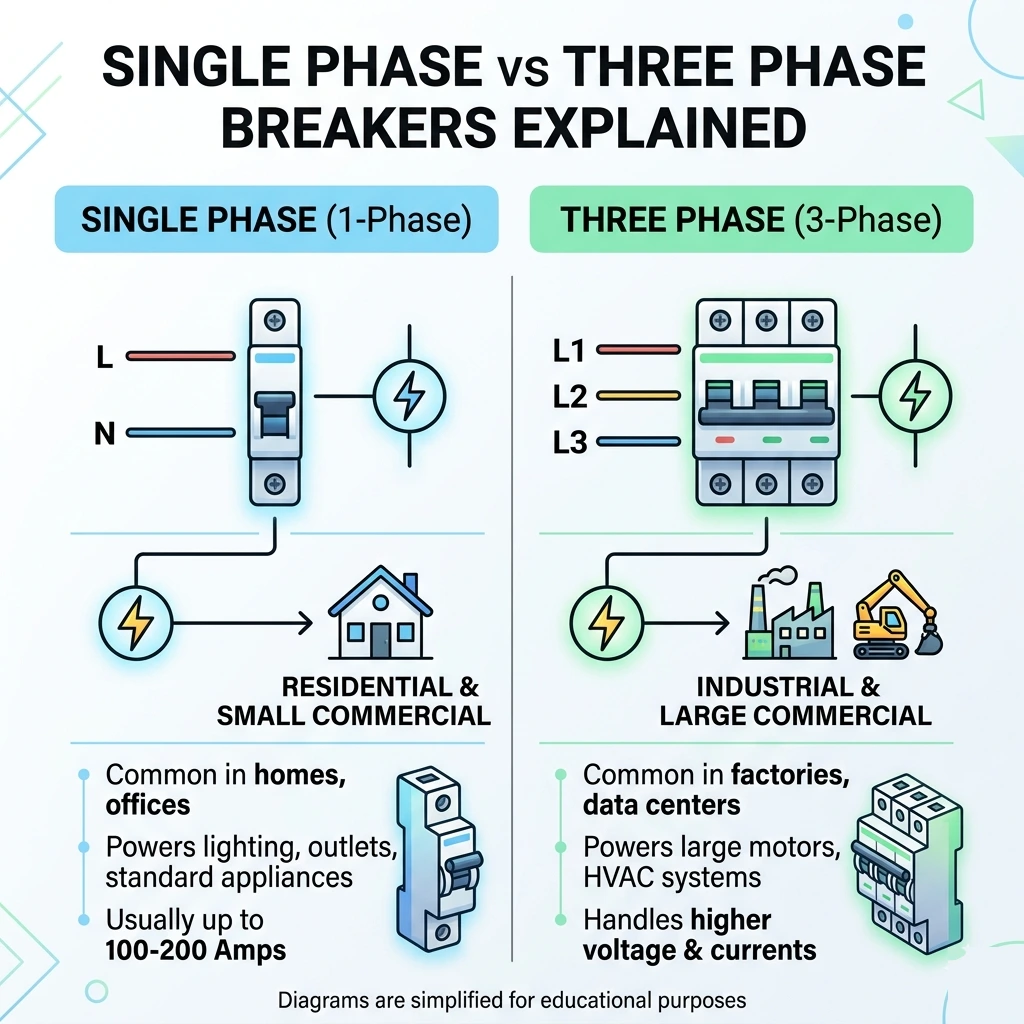
Single-phase breakers are designed for circuits with one live conductor and are commonly used in residential systems, while three-phase breakers protect circuits with three live conductors and are used in industrial and commercial applications. The key difference lies in power capacity, efficiency, and application scope.
When comparing a single phase vs three phase breaker, professionals must evaluate the total electrical load, the available grid supply, and the specific equipment requirements to ensure optimal safety and efficiency.
What Is a Single Phase Circuit Breaker?
Definition of Single Phase Breaker
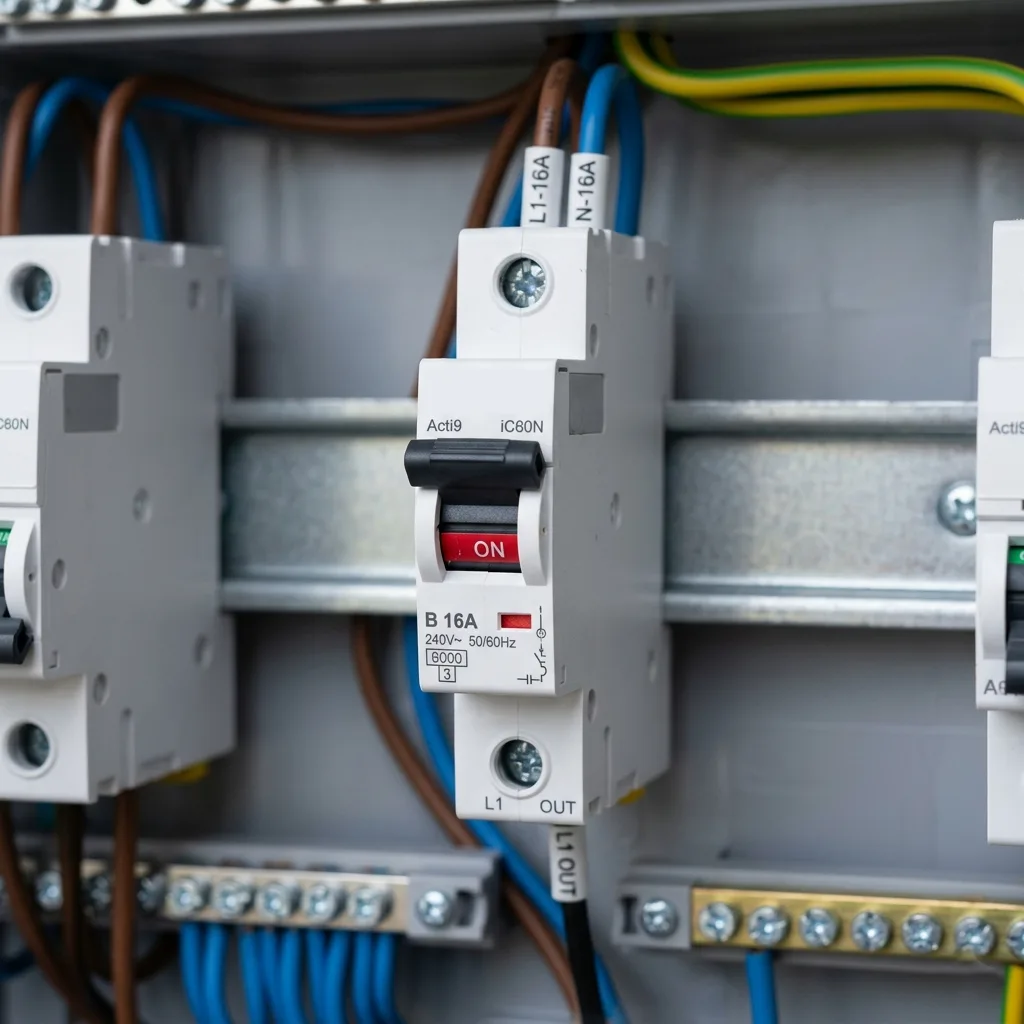
A single phase circuit breaker is an essential safety device designed to interrupt the flow of electricity in the event of an overload or short circuit. A single-phase circuit breaker protects circuits with one live conductor, typically used in residential electrical systems. It ensures that household appliances and lighting circuits operate within safe current limits, preventing electrical fires and equipment damage.
How Single Phase Systems Work
In a standard single-phase electrical system, power is delivered using two primary wires: one live (or phase) wire and one neutral wire. The live wire carries the current from the grid to the load, while the neutral wire provides the return path to complete the electrical circuit. These systems generally operate at stable voltage levels, most commonly 120V in North America or 230V in Europe and other regions. The alternating current (AC) cycles through a single sine wave, which is perfectly adequate for low to medium power demands.
Common Types of Single Phase Breakers
Depending on the specific installation requirements and regional standards, single-phase breakers come in different configurations. The most common are 1-Pole (1P) and 2-Pole (2P) breakers. Electricians often need to decide between these based on whether the neutral wire also needs to be switched or protected. For a detailed breakdown of these specific types, you can review 1P vs 2P Breakers at a Glance below.
1P vs 2P Breakers at a Glance
A 1-Pole (1P) breaker only protects the single live wire, which is standard for most basic residential lighting and outlet circuits. A 2-Pole (2P) breaker, however, takes up two slots in the panel. Depending on the region, a 2P breaker might be used to provide 240V across two live wires (common in US residential for heavy appliances) or to simultaneously switch both the live and neutral wires for added safety in 230V systems.
What Is a Three Phase Circuit Breaker?
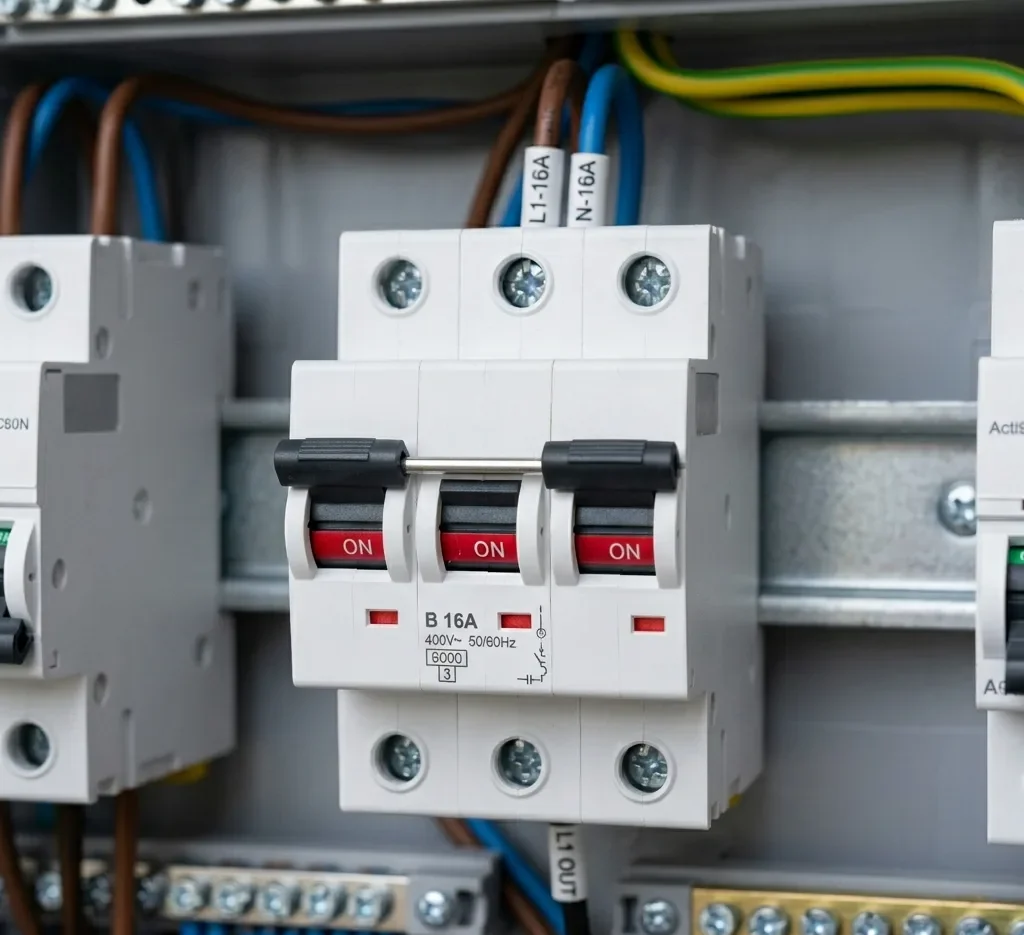
Definition of Three Phase Breaker
When electrical demands exceed the capacity of standard residential setups, three-phase power is utilized. A three-phase circuit breaker is a robust protective device designed to handle these higher loads simultaneously. A three-phase circuit breaker protects circuits with three live conductors and is used for high-power applications. It ensures that if a fault occurs on any of the phases, all phases are disconnected simultaneously, protecting expensive machinery from damage.
How Three Phase Systems Work
A three-phase electrical system employs three separate live wires (phases). The alternating currents in these three conductors reach their peak values sequentially, with a phase difference of 120 degrees between them. This overlap means that the total power delivered never drops to zero, unlike the pulsating nature of single-phase power. Consequently, three-phase systems can deliver more power efficiently and smoothly, which is critical for running large electric motors and heavy industrial machinery.
Common Types of Three Phase Breakers
In three-phase installations, engineers and electricians typically utilize 3-Pole (3P) or 4-Pole (4P) circuit breakers. The choice depends on whether the neutral conductor requires switching alongside the three live phases. For a concise comparison, refer to 3P vs 4P Breakers at a Glance.
3P vs 4P Breakers at a Glance
A 3-Pole (3P) breaker protects the three live phases (L1, L2, L3) and is generally used in symmetrical three-phase loads, such as motors, where a neutral connection is not required. A 4-Pole (4P) breaker protects the three live phases and also switches the neutral wire. This is often required in systems with unbalanced loads or where complete isolation of the circuit (including neutral) is necessary for safety and compliance with specific local codes.
Single Phase vs Three Phase Breakers: Key Differences
Understanding the difference between single and three phase breakers is crucial for designing safe and effective electrical panels. Below are the primary distinctions.
Power Capacity
The most significant difference lies in the amount of electrical power the breaker can safely manage. Three-phase breakers support higher power loads than single-phase breakers. While a single-phase breaker is limited to the capacity of one live wire, a three-phase breaker distributes the load across three wires, effectively allowing it to handle roughly three times the power for the same current rating per phase.
Efficiency
Three-phase systems are inherently more efficient. The 120-degree phase shift ensures a continuous, non-pulsating delivery of power. This means that a three-phase circuit breaker is part of a system that can transfer more electrical energy using less conductor material (thinner wires) compared to a single-phase system trying to deliver the equivalent amount of power.
Application Scope
Because of their distinct characteristics, the application scope for a single vs three phase circuit breaker is clearly divided. Single-phase breakers are the standard for residential homes, small retail shops, and general office lighting. Conversely, three-phase breakers are the backbone of industrial facilities, large commercial buildings, data centers, and heavy manufacturing plants.
Wiring and Complexity
Wiring a three-phase system involves managing more conductors, ensuring correct phase rotation, and balancing the loads across all three phases to prevent uneven stress on the system. Single-phase wiring is straightforward and easier to troubleshoot. Three-phase systems are more complex but provide better performance for heavy loads.
Comparison Table: Single Phase vs Three Phase Breakers
This quick reference guide highlights the structural and operational differences between single-phase and three-phase breakers, aiding engineers and B2B buyers in quick specification checks.
| Feature | Single Phase | Three Phase |
|---|---|---|
| Conductors | 1 live + 1 neutral | 3 live (+ neutral optional) |
| Power Capacity | Low – Medium | High |
| Application | Residential, Light Commercial | Industrial, Heavy Commercial |
| Breaker Types | 1P, 2P | 3P, 4P |
| Efficiency | Standard | High (Continuous power) |
Applications: When to Use Single Phase vs Three Phase Breakers
When to Use Single Phase Breakers?
Single-phase breakers should be specified for environments where power demands are modest. This includes almost all residential housing, individual apartments, and small commercial units. They are perfect for protecting circuits dedicated to lighting, standard wall outlets, televisions, computers, and minor household appliances like microwaves and refrigerators.
When to Use Three Phase Breakers?
When the environment demands substantial, continuous power, three-phase is mandatory. Three-phase breakers are used in industrial equipment, motors, and large commercial systems. Facilities utilizing heavy HVAC systems, large conveyor belts, industrial pumps, welding equipment, and massive server farms rely on three-phase breakers to ensure stability and prevent catastrophic overloads.
Hybrid Scenarios (Residential + EV + Light Commercial)
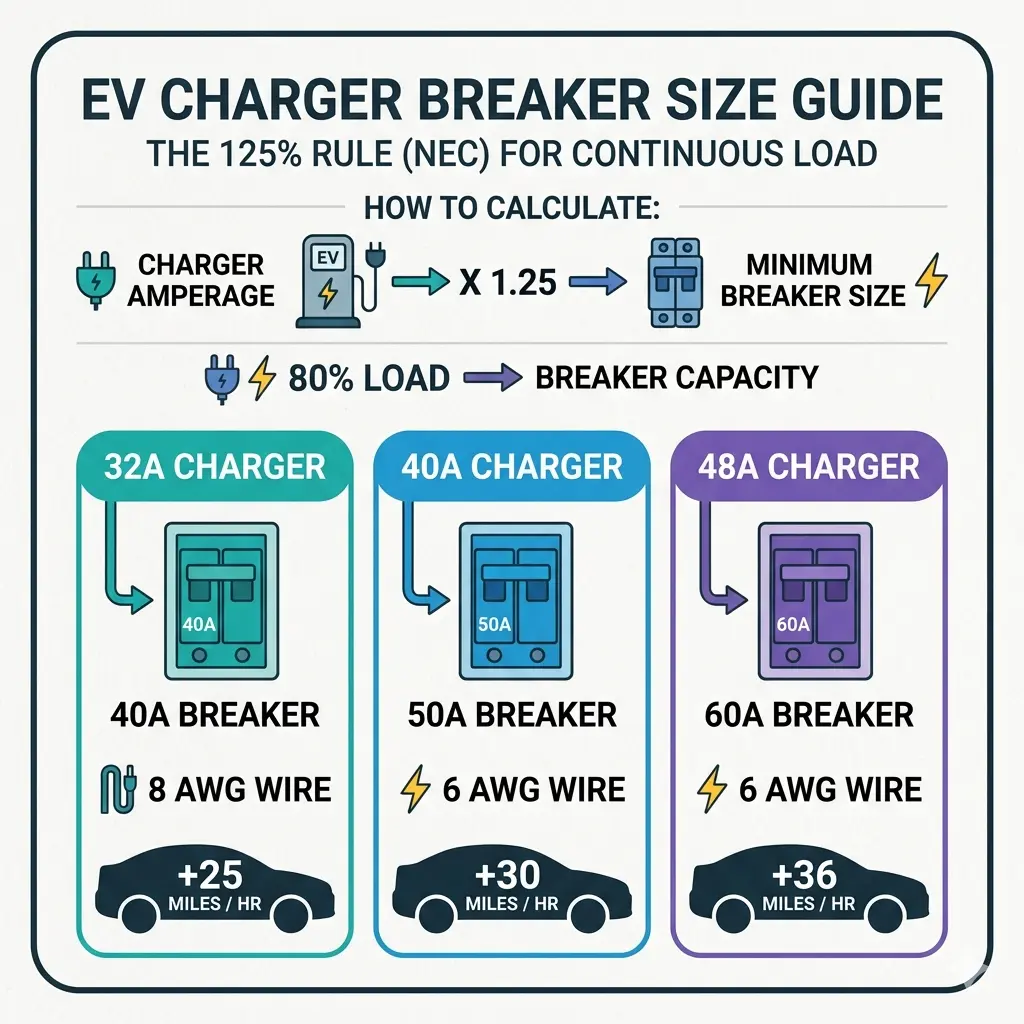
As technology evolves, the line between residential and commercial power needs is occasionally blurring. Some modern systems, such as EV charging or small commercial setups, may require three-phase breakers for higher efficiency. For instance, while a standard home EV charger operates on single-phase, fast-charging stations or large residential complexes with multiple high-capacity chargers often upgrade to three-phase systems to dramatically reduce charging times and manage the heavy load without straining the grid.
Why Three Phase Systems Are More Efficient
Continuous Power Delivery
In a single-phase AC system, the voltage crosses zero twice during every cycle. This means power delivery is actually pulsating. While unnoticeable in lighting, it causes vibration and inefficiency in large motors. Three-phase power, with its three overlapping alternating currents, never drops to zero. This continuous power delivery results in smoother operation of machinery, less vibration, and reduced mechanical wear and tear.
Reduced Energy Loss
For transmitting the same amount of power over long distances, three-phase systems require less conductor material (copper or aluminum) than single-phase systems. This reduction in material not only lowers installation costs but also minimizes electrical resistance. Three-phase systems reduce energy loss and improve system performance.
Common Mistakes When Choosing Between Single and Three Phase Breakers
Using Single Phase for High Loads
Attempting to run heavy commercial equipment on a single-phase supply is a common error. This leads to frequent breaker tripping, overheating of wires, and significant voltage drops, which can ultimately damage the equipment and pose a severe fire hazard.
Overusing Three Phase Systems
Conversely, specifying a three-phase system for a small residential property or a low-demand commercial space is an unnecessary expenditure. It increases the complexity of the panel board, requires more expensive breakers, and offers no tangible benefit if the loads do not require continuous high power.
Ignoring Infrastructure Limitations
Before specifying a breaker type, one must verify the utility supply. Installing a three-phase breaker panel is useless if the local utility grid only supplies single-phase power to the building. Upgrading a utility connection from single to three-phase can be extremely costly. Choosing the wrong system type can lead to inefficiency, higher costs, or safety risks.
How to Choose Between Single Phase and Three Phase Breakers
Step 1: Identify Power Requirements
Calculate the total wattage or amperage required by the facility. Sum up the maximum concurrent loads. If the total demand exceeds the standard single-phase capacity (usually around 100A to 200A depending on the region), a three-phase system will likely be necessary.
Step 2: Check Available Power Supply
Consult with the local utility provider to determine what type of power is currently delivered to the site. If only single-phase is available, utilizing three-phase breakers would require a costly utility upgrade or the installation of a phase converter, which is often impractical.
Step 3: Evaluate Load Type
The nature of the equipment dictates the required breaker. High-power and motor-driven loads typically require three-phase systems. If the facility will operate large industrial motors, commercial HVAC units, or heavy machinery, three-phase is non-negotiable for operational stability.
Step 4: Consider Cost and Complexity
Balance the initial installation cost against long-term operational efficiency. Three-phase panels and breakers are more expensive upfront and require specialized electrical contractors for installation and maintenance. Ensure the investment is justified by the power demands.
FAQ: Single Phase vs Three Phase Breakers
Depends on application; three-phase is better for high loads, while single-phase is perfectly adequate and more cost-effective for low-load residential uses.
No, unless specifically designed and approved by local codes, a three-phase breaker is meant for three live wires. Using it in a single-phase system is improper and potentially dangerous.
Because it delivers continuous power due to the 120-degree overlapping phase shift, reducing conductor material required and minimizing energy transmission losses.
Single-phase breakers (typically 1P or 2P) are standard in almost all residential homes.
Standard home EV chargers run on single-phase. However, some high-power fast-charging commercial systems require three-phase breakers to deliver electricity rapidly and efficiently.
Conclusion: Choosing the Right Breaker Type
Understanding the single phase vs three phase breaker dynamic is foundational for modern electrical design and maintenance. In summary, single-phase systems are characterized by simplicity and are ideal for standard residential applications. Three-phase systems are defined by high efficiency and are indispensable for industrial and heavy commercial applications. The choice between single-phase and three-phase breakers depends on power demand, system availability, and application requirements.
Pro-Tip for B2B Buyers and Electrical Engineers
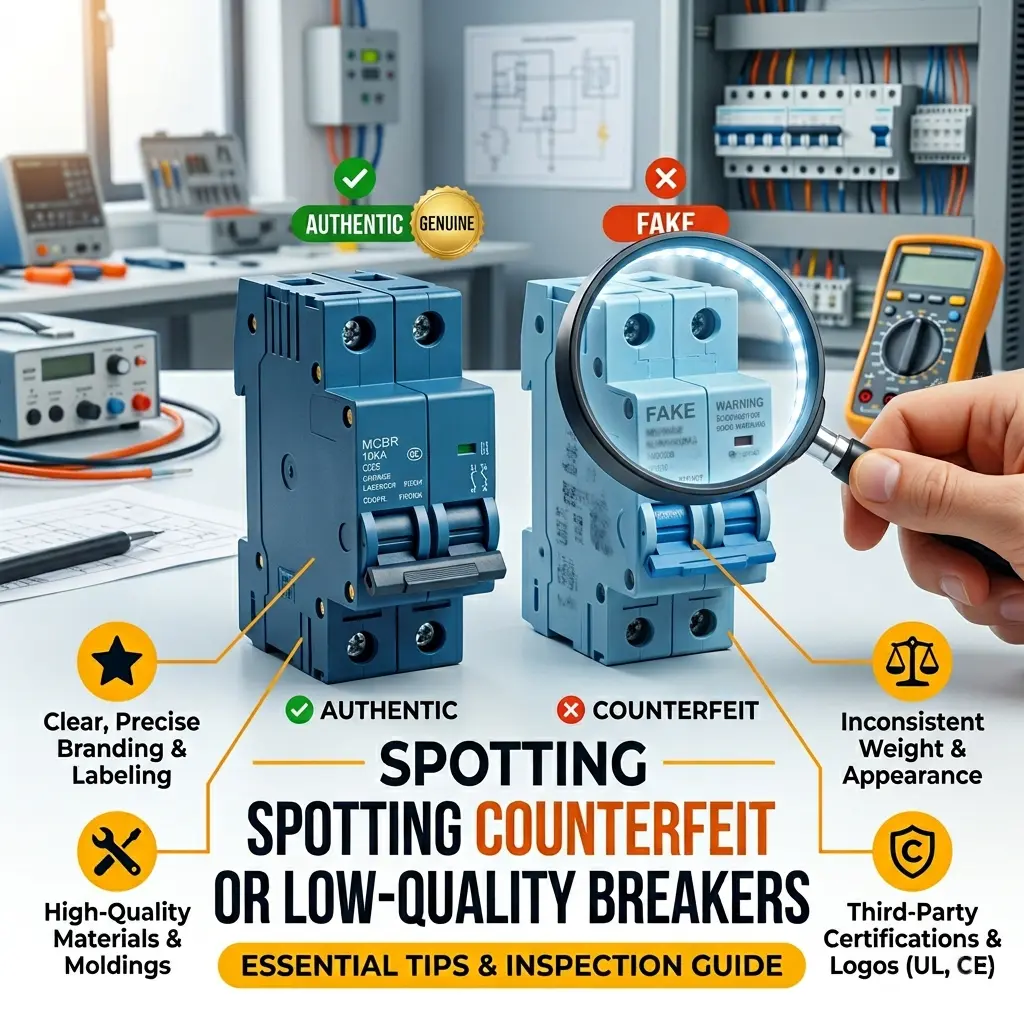
When procuring circuit breakers for large-scale projects, understanding the fundamental difference between single and three phase breakers is just the first step. For professional B2B purchasing, always prioritize evaluating the exact rated current (Amperage) and the necessary number of poles (1P, 2P, 3P, 4P) based on your specific load requirements. Ensure that all breakers meet stringent international or local standard certifications (such as IEC, UL, or CE) to guarantee safety and compliance. Furthermore, consider the application environment—whether it is a standard commercial building or a harsh industrial setting—and establish a relationship with a manufacturer that guarantees supply chain stability for ongoing maintenance and future expansions.