Executive Summary: As the global electrical manufacturing landscape evolves, understanding the shifts in procurement strategies is critical. This comprehensive guide details the 2026 insights into low voltage breaker sourcing, highlighting exactly what Canton Fair electrical buyers demand from circuit breaker suppliers China. From certification requisites to flexible MOQs and supply chain reliability, discover the pillars of successful B2B electrical trade.
Quick Answer: What Do Buyers Prioritize at the Canton Fair?
At the Canton Fair, buyers focus on price-to-quality balance, international certifications (CE, UL, IEC), reliable delivery timelines, OEM/ODM capabilities, and flexible minimum order quantities (MOQs). These factors determine supplier selection in today’s competitive electrical market. When evaluating circuit breaker suppliers China, importers are no longer merely looking at the bottom-line cost. Instead, they are assessing the holistic value a manufacturer brings to the table, ensuring that low voltage breaker sourcing aligns with stringent local regulations and fast-paced market demands.
Introduction: How the Canton Fair Reflects Global Buyer Demand
Why the Canton Fair Matters for Electrical Buyers
The Canton Fair has historically served as the barometer for international trade, particularly in the electrical and hardware sectors. For decades, it has brought together thousands of manufacturers and international delegates. Today, it remains an indispensable arena where electrical distributors, wholesalers, and electricians gauge industry trends, technological advancements, and supplier capacities. The sheer volume of exhibitors makes it highly competitive, forcing buyers to develop sophisticated metrics for evaluating potential partners. Ultimately, the Canton Fair is one of the most important sourcing platforms where global buyers evaluate suppliers based on product performance, compliance, and supply chain reliability.
How Buyer Expectations Have Changed in 2026
As we navigate 2026, Canton Fair electrical buyers have shifted their mindsets drastically compared to previous years. The focus has decisively pivoted toward long-term cooperation rather than one-off transactional purchases. Buyers understand that investing in a stable relationship with a reliable manufacturer pays dividends through consistent product quality and prioritized service.
Additionally, supply chain risk control is paramount. Disruptions over the past few years have taught importers that a cheap product is worthless if it cannot be delivered on time. Therefore, buyers are actively auditing suppliers for geographic stability, raw material sourcing strategies, and backup production capabilities. Finally, technical capability—not just price—has taken center stage. Buyers are looking for innovative designs, smart breaker integration, and advanced fault-detection mechanisms that elevate their offerings in local markets.
Price vs Quality: What Is the Real Decision Factor?
Why Lowest Price Is No Longer the Only Priority
Historically, aggressive price undercutting was a primary tactic for securing massive orders. However, the paradigm has shifted. In 2026, buyers are shifting from “lowest price wins” to “best value wins,” focusing on total lifecycle cost rather than upfront price. An inexpensive breaker that fails prematurely incurs massive costs in the form of warranty claims, brand damage, and potential liability or safety hazards. Electricians and contractors demand reliability; hence, B2B buyers must source products that minimize operational failures, making quality an uncompromisable asset.
What Defines “High-Quality” Circuit Breakers for Buyers
When discussing quality in low voltage breaker sourcing, buyers have precise technical benchmarks in mind. They rigorously assess:
- Trip Reliability: The core function of a breaker is safety. Buyers demand precise tripping mechanisms that respond accurately to overloads and short circuits without nuisance tripping.
- Electrical Endurance: The lifespan of the contacts under load operations must meet or exceed industry standards, ensuring longevity in residential, commercial, and industrial applications.
- Batch Consistency: High quality is not just about a perfect golden sample; it is about ensuring that a production run of 100,000 units maintains identical specifications and performance levels across the board.
How Buyers Evaluate Cost vs Performance
To ensure they are getting optimal value, Canton Fair electrical buyers employ a structured evaluation process. Initially, sample testing is conducted rigorously in independent or local laboratories to verify manufacturer claims. Next, certification validation is performed to ensure the components meet the necessary safety standards for their specific markets. Finally, buyers look at historical customer cases—seeking references and case studies from circuit breaker suppliers China to prove they have a track record of satisfying clients with similar performance and cost expectations.
Certifications: Why CE, UL, and IEC Compliance Is Critical
What Certifications Buyers Require
In the electrical sector, safety is regulated by strict international and regional standards. Entering a market without the proper documentation is impossible. Therefore, the presence of specific certifications is often the very first filter applied during low voltage breaker sourcing. CE marking is absolute mandatory for buyers targeting the European Economic Area, indicating conformity with health, safety, and environmental protection standards. For the North American market, UL (Underwriters Laboratories) certification is critical, as local electricians and inspectors will reject non-UL listed components. Globally, IEC (International Electrotechnical Commission) standards serve as the essential baseline for electrical safety, forming the foundation for many national standards.
Why Certification Impacts Purchasing Decisions
A supplier’s ability to provide valid, comprehensive certifications is a direct reflection of their manufacturing maturity and technical competence. Certified products reduce compliance risk and simplify market entry for importers and distributors. When a product is already certified, it saves the buyer months of testing time and tens of thousands of dollars in laboratory fees, allowing for a faster go-to-market strategy.
Common Buyer Questions About Certification
During negotiations at trade shows, buyers will probe suppliers with specific questions regarding their paperwork:
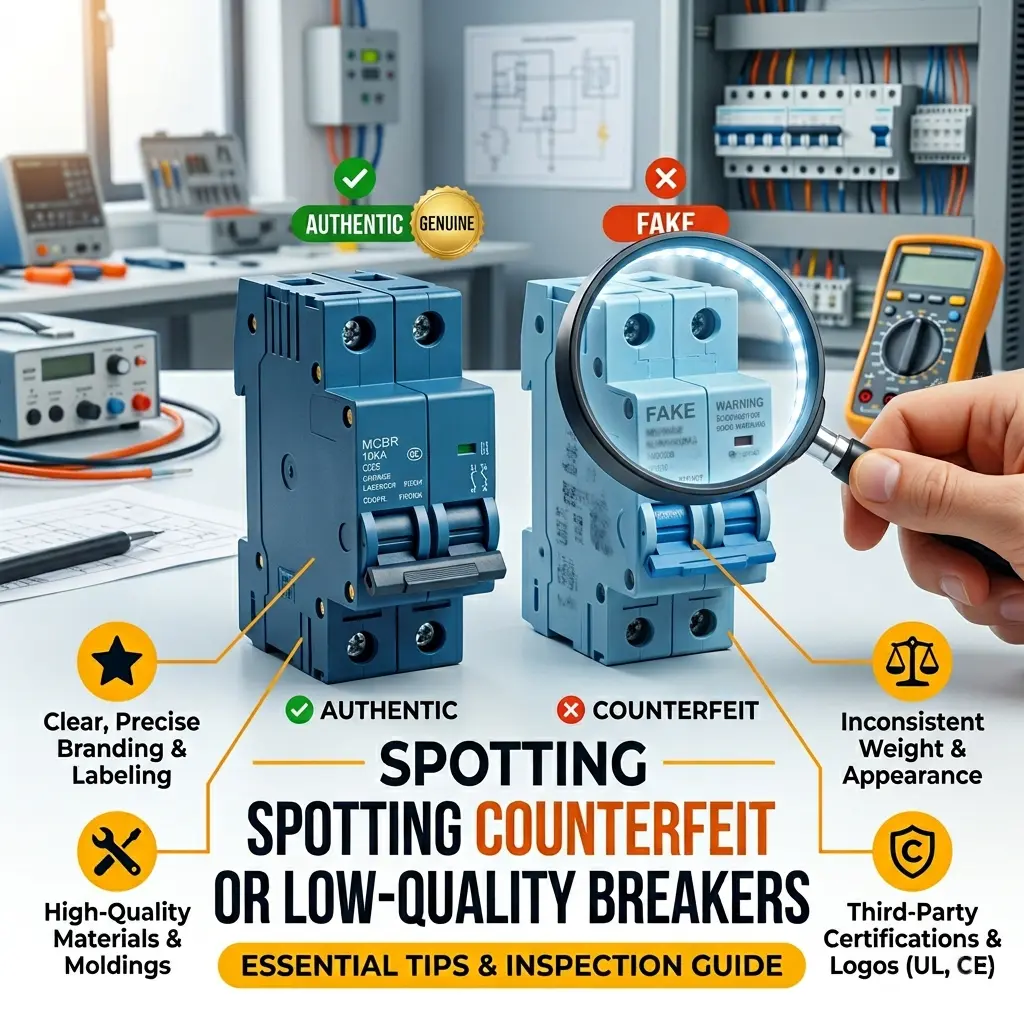
- Are certificates authentic? Buyers frequently cross-reference certification numbers with issuing bodies to weed out fraudulent documents.
- Are they current? Standards evolve, and buyers need to know if the products comply with the latest regulatory updates (e.g., updated IEC 60898 or IEC 60947 standards).
- Do they cover the target market? A certification valid in Asia might not carry weight in South America or Europe, so geographical coverage is heavily scrutinized.
Delivery Time and Supply Chain Reliability
Why Lead Time Matters More Than Ever
In the modern construction and infrastructure sectors, project cycles are exceptionally strict. Electricians and contractors work on tight schedules where any delay can cause a domino effect, pushing back entire building completions. Consequently, high delay costs mean that wholesale buyers and distributors cannot afford to partner with suppliers who consistently miss shipment dates. Lead time precision has become a critical key performance indicator.
What Buyers Expect from Suppliers
To mitigate these risks, buyers expect clear production timelines, stable supply capacity, and transparent communication. If there is a delay due to unavoidable circumstances, proactive communication allows buyers to adjust their domestic schedules. Transparency regarding factory utilization rates and realistic delivery windows is highly valued over empty promises.
Impact of the 2026 Materials Market
The 2026 manufacturing landscape is still grappling with raw material volatility. The fluctuating costs of copper, silver (for contacts), and specialized plastics impact both pricing and production schedules. Unstable supply of these foundational elements can bring assembly lines to a halt. Recognizing these macro-economic challenges, buyers increasingly prefer long-term supplier partnerships. A strong, long-term relationship ensures that circuit breaker suppliers China will prioritize their orders during material shortages, securing a steady flow of inventory.
OEM and ODM Capabilities: A Key Differentiator
What OEM and ODM Mean for Circuit Breaker Buyers
For B2B buyers looking to build their own brand equity, manufacturing partnerships are categorized mainly into OEM and ODM. OEM (Original Equipment Manufacturer) services primarily involve private labeling, where the buyer places their brand on an existing, proven breaker design. ODM (Original Design Manufacturer) goes a step further into product customization and joint development, allowing buyers to co-create breakers with unique specifications, smart features, or specific form factors tailored to their distinct market needs.
Why Buyers Prefer Suppliers with Customization Ability
The electrical component market is heavily commoditized. To stand out, distributors and brands must offer something unique. Customization allows buyers to differentiate their products in competitive local markets. Whether it is a breaker designed to withstand higher ambient temperatures for Middle Eastern markets or one with smart-grid connectivity for European smart homes, customization is the key to unlocking higher profit margins.
Common Customization Requests
When discussing low voltage breaker sourcing with OEM/ODM capabilities, buyers typically request:
- Appearance Design: Custom colors for handles or housing to match corporate branding, and specific footprint designs for proprietary consumer units.
- Parameter Customization: Adjusting short-circuit breaking capacities, specific tripping curves (B, C, D types), or adapting to non-standard voltage requirements.
- Packaging and Branding: Custom retail-ready packaging, laser-engraved logos, and localized instruction manuals that enhance the end-user (electrician) experience.
The Rise of Small Batch Orders and Flexible MOQs
Why Buyers Are Moving Toward Smaller Orders
The traditional model of ordering massive shipping containers of a single SKU is evolving. Buyers are increasingly moving toward smaller batch orders primarily driven by market testing needs. As consumer preferences and regulations shift rapidly, importers want to test new smart breakers or AFDDs (Arc Fault Detection Devices) without committing enormous capital. Furthermore, smaller orders result in lower inventory pressure, reducing warehousing costs and improving cash flow.
How Suppliers Are Adapting
Recognizing this shift, top-tier circuit breaker suppliers China are adapting their production lines to be more agile. They are offering lower Minimum Order Quantities (MOQs) and implementing mixed-batch support. This means buyers can fill a single shipping container with a wide variety of amperages, pole configurations, and breaker types, rather than a monolithic order of one specific product.
What This Means for New Buyers
This industry shift is highly advantageous for emerging distributors and boutique wholesalers. Flexible MOQs lower the barrier for new buyers entering the circuit breaker market. It allows them to curate a comprehensive product portfolio and scale their business gradually, establishing trust with a manufacturer before ramping up to multi-container monthly volumes.
What This Means for Circuit Breaker Manufacturers
How to Attract B2B Buyers at Trade Shows
For manufacturers exhibiting at the Canton Fair, understanding these buyer dynamics is crucial for capturing leads. To stand out, suppliers must present clear product positioning—distinguishing between their budget lines and premium, heavy-duty industrial lines. A strong certification display should be front and center at their booths to immediately establish trust. Furthermore, professional communication is vital; sales representatives must be deeply knowledgeable about technical specifications, regional standards, and export logistics, speaking the language of the electrical engineer as well as the procurement manager.
Key Competitive Advantages in 2026
To dominate the low voltage breaker sourcing landscape in 2026, manufacturers must solidify three pillars:
- Stable Supply Chain: Demonstrating resilience against material shortages and logistics disruptions.
- Technical Capability: Investing in R&D to offer smart, IoT-enabled breakers and ensuring rigorous automated quality control.
- Service Capability: Providing comprehensive after-sales support, marketing materials, and rapid response times for ODM developments.
FAQ: Circuit Breaker Sourcing at the Canton Fair
What do buyers look for in circuit breaker suppliers?
Buyers prioritize quality, certification, pricing, delivery reliability, and customization capabilities. They seek partners who offer a holistic value proposition rather than just the cheapest unit price.
Are certifications necessary for exporting circuit breakers?
Yes, certifications like CE and UL are essential for entering international markets. They prove compliance with strict electrical safety and performance standards mandated by regional laws.
What is a typical MOQ for circuit breakers?
MOQs vary by manufacturer and product complexity, but many suppliers now offer flexible or small-batch options, sometimes starting as low as a few hundred units for standard items to accommodate market testing.
Why is OEM/ODM important for buyers?
It allows brand differentiation and better positioning in local markets. By utilizing OEM/ODM services, buyers can build brand loyalty, customize parameters for specific regional needs, and control their pricing strategies.
How do buyers verify supplier quality?
Through comprehensive samples, independent laboratory testing, verifying the authenticity of international certifications, and conducting thorough on-site or third-party factory audits.
Conclusion: What Defines a Competitive Circuit Breaker Supplier in 2026
The landscape of low voltage breaker sourcing has matured significantly. As witnessed by the evolving demands of Canton Fair electrical buyers, price is no longer the sole determining factor in closing a deal. International certification has become the undeniable baseline requirement to even sit at the negotiating table. Beyond that, a manufacturer’s supply chain capacity, transparency, and agility heavily dictate their success in winning long-term contracts. The ability to offer OEM/ODM customization and adapt to flexible batch ordering demonstrates a supplier’s commitment to their buyer’s localized growth.
Ultimately, navigating the global electrical market requires strategic foresight and rigorous vetting. Importers and wholesalers need manufacturing partners who act as extensions of their own business. The most competitive circuit breaker suppliers in 2026 are those that combine quality, certification, flexibility, and reliable delivery.