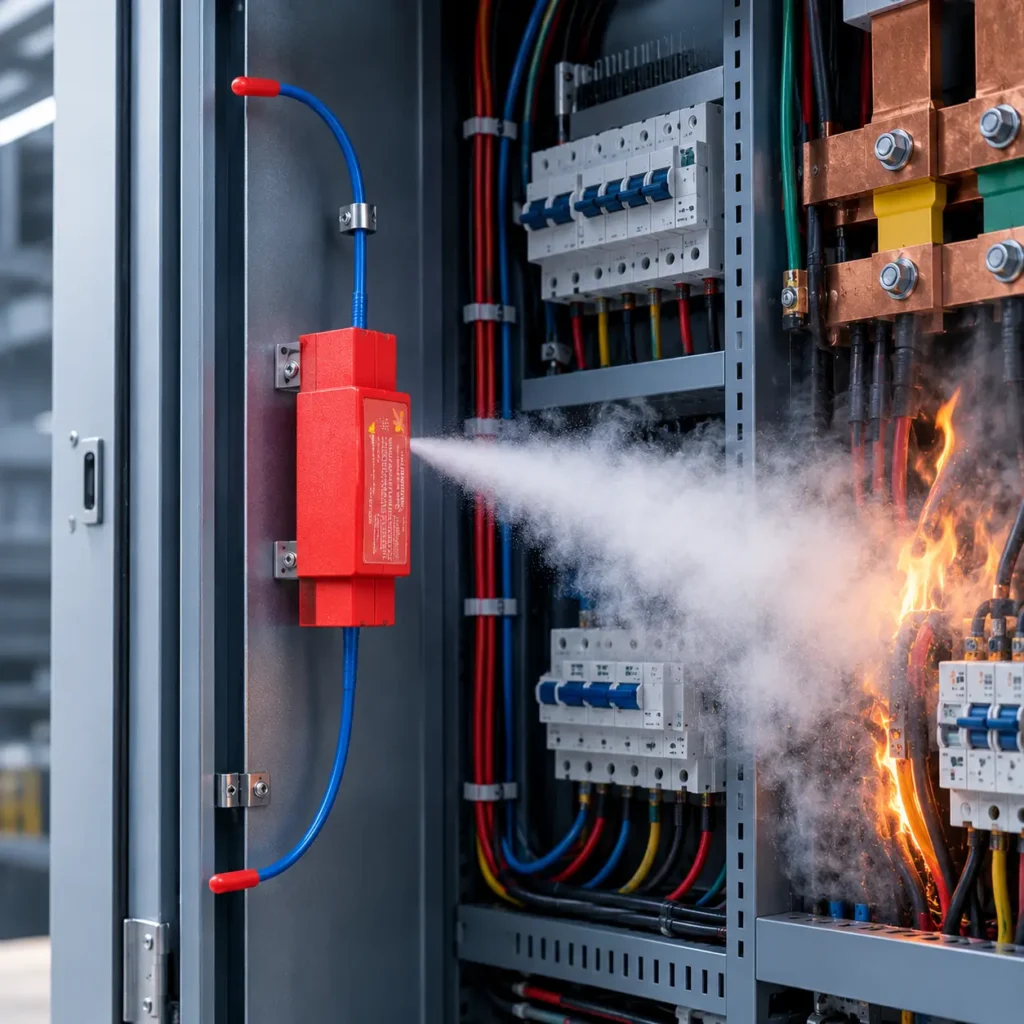
In modern industrial facilities, data centers, and power distribution infrastructures, electrical enclosures house dense arrays of critical components. Overloaded circuits, component degradation, loose terminations, and insulation breakdown make these micro-environments prone to rapid fire outbreaks. A heat-activated aerosol fire extinguishing device is a compact, autonomous, non-pressurized fire suppression unit engineered specifically to detect and suppress localized fires directly at the point of origin. Activated automatically by thermal energy rather than external electrical trigger signals, these standalone devices release an ultra-fine cloud of potassium-based solid-particulate aerosol into enclosed spaces, terminating the combustion chain reaction within seconds.
What Is a Heat-Activated Aerosol Fire Extinguishing Device?
A heat-activated aerosol fire extinguishing device (also referred to as a thermal-activated fire suppression unit or automatic aerosol fire extinguisher) represents an advanced class of condensed aerosol fire extinguishing technology. Unlike conventional flood systems that rely on large pressurized gas cylinders, extensive manifold pipe networks, and active electronic detection loops, thermal aerosol units operate as self-contained micro-suppression modules designed for direct placement inside high-risk compartments.
How Does a Heat-Activated Aerosol Fire Extinguisher Work?
The fundamental mechanism of a heat-activated aerosol device relies on an integrated thermal detection system and a solid chemical aerosol-forming compound. The operational sequence unfolds across three tightly coupled stages:
Thermal Activation Mechanism: The unit incorporates a temperature-sensitive detection element—typically a calibrated thermal cord, flexible thermal lead, or eutectic glass thermal bulb—positioned directly over or adjacent to potential electrical ignition points.
Heat-Triggered Aerosol Release: When localized ambient heat or a direct flame reaches the rated threshold temperature (e.g., 170°C for standard units), the thermal activation element undergoes rapid thermal initiation, propagating an ignition impulse to the internal solid aerosol generator without requiring an external electrical power supply.
Fire Suppression Process Inside an Enclosed Space: Upon ignition, the solid chemical block undergoes a controlled, non-explosive exothermic thermochemical reaction. It transforms into an ultra-fine, highly concentrated aerosol cloud (primarily potassium carbonate, K2CO3, and inert gases such as N2 and CO2). The aerosol discharges rapidly into the protected volume, achieving total flooding of the enclosed cabinet.
What Is the Difference Between Heat-Activated and Electrically Activated Aerosol Suppression?
Aerosol fire extinguishing systems generally fall into two distinct activation architectures: thermal/heat-activated and electrically activated. Understanding their fundamental engineering differences is crucial for selecting the correct protection strategy:
| Comparison Factor | Heat-Activated Aerosol Device | Electrically Activated Aerosol System |
| Trigger Mechanism | Direct thermal sensing (thermal cord, bulb, or thermal lead) | Electrical impulse from fire alarm control panel (FACP) or smoke/heat detectors |
| Power Dependency | 100% Autonomous (Zero electrical power or battery backup required) | Requires reliable power supply (24V DC, battery backup, or pulse actuator) |
| System Architecture | Standalone, self-contained single unit or localized cluster | Integrated network requiring FACP, wiring loops, sensors, and actuator modules |
| Response Location | Localized micro-environment (inside cabinet, junction box, or switchgear cell) | Zone-level or room-level flood; can be linked to overall facility BMS/SCADA |
| Typical Applications | Compact electrical cabinets, standalone OEM machinery, remote PV combiner boxes | Large switchgear rooms, server racks with aspirating smoke detection, telecom vaults |
What Are the Main Components of a Heat-Activated Aerosol Device?
A standard heat-activated aerosol fire extinguishing unit is engineered with high-integrity materials to withstand harsh industrial environments while guaranteeing fail-safe discharge. Its primary internal and external sub-assemblies include:
Solid Aerosol-Generating Unit: A precision-molded cylinder or canister containing a formulated solid chemical charge (primarily potassium nitrate/perchlorate oxidizers and organic resin binders). It remains inert and unpressurized throughout its standby lifespan.
Thermal Activation Element & Initiator: A specialized pyrotechnic or thermal-sensitive fuse assembly that reliably converts reaching the threshold temperature into an ignition impulse.
Flexible Thermal Lead or Activation Cable: A thermal cord (typically 10 cm to several meters depending on configuration) routed around critical busbars, terminals, and breakers to intercept rising convection heat.
Cooling & Filtration Matrix: Internal ceramic or metal heat-absorption layers that cool the hot gas-particulate stream before it exits the canister, minimizing discharge temperatures.
Mounting Structure: Standardized 35 mm DIN-rail brackets or screw-mount flanges for swift integration inside standard electrical enclosures.
Discharge Outlet & Diffuser Nozzle: Precision-engineered discharge ports designed to distribute the aerosol jet evenly throughout the enclosure volume without creating destructive kinetic pressure spikes.
How Does a Heat-Activated Aerosol Fire Suppression Device Work?
To comprehend the suppression efficiency of condensed aerosol systems, engineers must look at the physical and chemical interactions occurring at the molecular level within an electrical enclosure.
What Temperature Activates a Heat-Activated Aerosol Device?
Heat-activated aerosol devices are calibrated with specific thermal activation thresholds. In standard industrial models (such as compact DIN-rail modules), the nominal rated activation temperature is commonly set at 170°C (with variations available at 140°C, 170°C, or 200°C depending on manufacturer specifications and enclosure operating baselines).
It is essential to distinguish between ambient cabinet operating temperature and the activation threshold. An electrical enclosure with high-power variable frequency drives (VFDs) or transformers might operate normally at ambient temperatures between 45°C and 65°C. A 170°C thermal lead provides sufficient thermal headroom to prevent false activations under peak operational heat while guaranteeing swift, positive triggering when an electrical fault (such as arcing or terminal glowing) generates intense localized thermal escalation.
What Happens After the Device Is Activated?
The suppression sequence progresses through four systematic phases within milliseconds of thermal initiation:
1. Heat Interception & Ignition: The thermal lead absorbs thermal energy from the growing fire. Upon reaching 170°C, the chemical core initiates a rapid reaction wavefront traveling to the aerosol canister.
2. Aerosol Generation & Cooling: The solid propellant undergoes combustion, creating micro-particulate potassium salts suspended in inert gases. The mixture passes through internal cooling filters.
3. 3D Total Flooding Distribution: The aerosol discharges from the nozzle as a buoyant, dense fog. Due to particle sizes ranging from 1 to 5 microns, the aerosol exhibits gas-like dispersion, flowing around complex wiring harnesses, contactors, and structural obstacles.
4. Chemical Chain Termination (Flame Knockdown): Free potassium radicals (K+) dissociate from the aerosol and bind with combustion chain-carriers (hydroxyl radicals OH* and hydrogen radicals H*), forming stable KOH and H2O molecules. This interrupts the combustion cycle chemically without depleting oxygen levels below breathable thresholds.
How Quickly Does an Aerosol Fire Extinguishing Device Release Its Agent?
Speed of discharge is one of the most critical metrics in electrical panel protection. For a typical compact model (e.g., part number LFE10G with 10 g propellant mass), the rated spray release time is less than 6 seconds (typically 3 to 5 seconds). Rapid discharge ensures the total flooding extinguishing concentration is established before the fire compromises enclosure integrity or spreads to adjacent equipment.
Important Technical Note: Engineers must differentiate between activation delay time (the time required for thermal heat buildup to reach 170°C on the sensor) and spray release time (the physical discharge duration once initiated). Performance is governed by enclosure airtightness, ventilation conditions, and proximity of the thermal lead to potential hot spots.
Where Are Heat-Activated Aerosol Fire Extinguishing Devices Used?
Because of their autonomous nature, compact footprint, and zero pipework requirements, thermal aerosol devices excel in localized micro-environments where conventional sprinkler or gas piping installations are physically or economically unfeasible. However, engineering teams must differentiate between verified core applications and emerging or regulated use cases.
Can Aerosol Fire Suppression Protect Electrical Cabinets and Control Panels?
Yes. Enclosed electrical cabinets and industrial control panels represent the primary, highly verified application field for compact aerosol units. These include:
Motor Control Centers (MCCs) and automation control panels containing PLCs, relays, and contactors.
Low-voltage compact distribution enclosures and lighting panels in manufacturing facilities.
Outdoor Telecom and Traffic Control Enclosures exposed to weather variations and remote operation.
CNC machinery control cabinets, crane power panels, and marine electrical compartments.
“Industrial Motor Control Centers (MCCs) face heavy thermal stress during startup; pair aerosol cabinet protection with proper strategies for preventing nuisance trips on motor loads to maintain full system reliability.”
Are Heat-Activated Aerosol Devices Suitable for Low Voltage Switchgear?
Low-voltage (LV) switchgear assemblies feature high continuous currents, busbar joints, and circuit breaker compartments where thermal runaway from loose connections is a recognized hazard. Thermal aerosol units provide effective compartment-level micro-protection. They fit easily on standard 35 mm DIN rails inside breaker cubicles, working synergistically with primary electrical protection (such as circuit breakers and earth leakage relays) by suppressing secondary insulation and plastic fires.
“Because contact resistance from overheating and loose connection issues in circuit breakers can generate localized hotspots before a breaker trips, standalone aerosol devices provide essential micro-environment fire suppression.”
Can These Devices Be Used in Solar PV and Battery Energy Storage Systems?
In Solar Photovoltaic (PV) installations, heat-activated aerosol devices are frequently integrated inside PV combiner boxes and string inverter compartments to guard against DC arc-fault fires.
Application Boundary for Battery Energy Storage Systems (BESS): While compact aerosol devices are suitable for auxiliary electrical compartments, power conversion systems (PCS), and control cabinets associated with BESS, their deployment directly inside battery cell modules for thermal runaway suppression requires rigorous project-specific validation. Lithium-ion thermal runaway involves flammable off-gas generation (H2, CO, CH4) and self-sustaining internal oxidizer reactions. Aerosol suppression can extinguish active electrolyte flames, but must be coordinated with gas venting, thermal barriers, and specialized BESS fire mitigation standards (such as UL 9540A and NFPA 855).
“While aerosol modules contain active enclosure fires, ensuring proper Solar PV breaker selection (AC vs DC) is vital to safely extinguish high-voltage DC arcs at the circuit level.”
“Integrating heat-activated aerosol extinguishers inside PV combiner boxes complements other essential protection devices in solar power systems, such as surge protectors and specialized DC switches.”
Can Aerosol Fire Suppression Be Used in EV Charging Equipment?
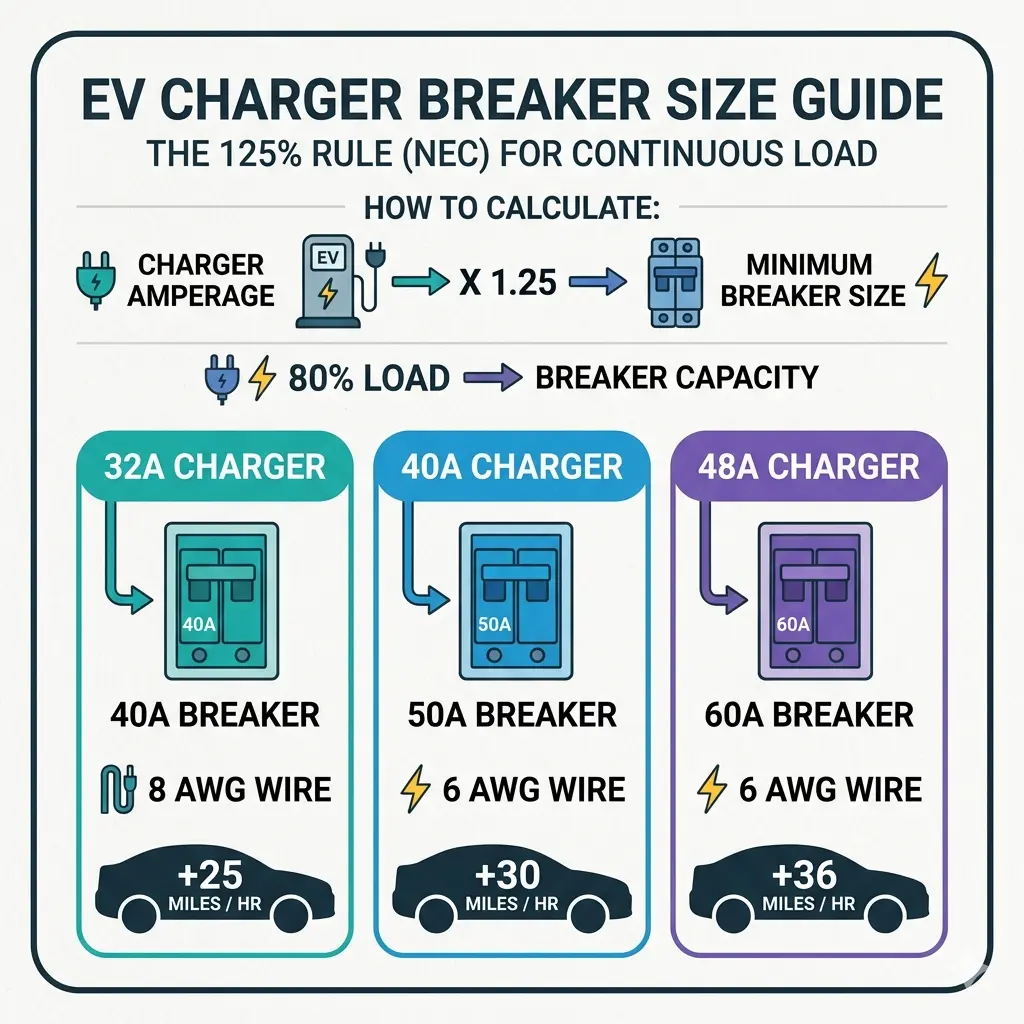
Commercial and ultra-fast DC Electric Vehicle (EV) chargers handle extreme power densities (150 kW to 480 kW+), generating substantial thermal stress in power conversion modules, AC/DC rectifiers, and contactor bays. Compact thermal aerosol devices are increasingly adopted by OEM charger manufacturers to provide automated, localized fire containment within charger power cubicles without requiring complex plumbing.
“For ultra-fast DC chargers subject to continuous high power draws, aerosol micro-suppression enhances the site’s essential electrical protection for EV charging stations by suppressing localized fires inside power conversion bays.”
What Are the Advantages and Limitations of Heat-Activated Aerosol Fire Suppression?
Every fire protection technology presents specific engineering trade-offs. A thorough understanding of both strengths and operational constraints allows specifiers to design balanced safety systems.
What Are the Main Advantages of Compact Aerosol Fire Extinguishers?
Ultra-Compact Form Factor: Requiring no storage cylinders, manifolds, or discharge pipes, compact aerosol units install directly on DIN rails or side panels, consuming minimal cabinet volume.
100% Autonomous Standalone Operation: Thermal activation requires no external electrical power, auxiliary batteries, or control panel logic, eliminating vulnerability to power outages during electrical faults.
Zero Pressure Vessel Hazards: The solid extinguishing agent is non-pressurized during standby, simplifying transportation, routine maintenance, and regulatory compliance.
High Extinguishing Efficiency: Potassium-based aerosol delivers an extinguishing concentration of roughly 30–100 g/m³, making it significantly lighter and more compact per protected unit volume than gaseous agents.
Extended Maintenance-Free Lifespan: High-quality hermetically sealed units feature operational service lives of up to 10 years without requiring annual pressure testing or refilling.
What Are the Limitations of Aerosol Fire Suppression Devices?
Enclosure Volume & Leakage Dependence: Aerosol systems are designed strictly for total-flooding within defined volumetric limits. Cabinets with unsealed louvers, open grilles, or active forced ventilation may dissipate the aerosol cloud before achieving complete knockdown.
Post-Discharge Residue Management: Discharged aerosol leaves a micro-particulate salt deposit (primarily K2CO3). In high-humidity environments, this residue can absorb moisture and exhibit mild conductivity if left uncleaned. While non-corrosive when dry, thorough vacuuming and solvent cleaning of electronics are required prior to re-energizing.
Thermal Proximity Requirements: Standalone thermal-activated units rely on localized heat convection reaching the thermal lead. If an ignition source is shielded by massive internal barriers, activation may be delayed compared to aspirating smoke detection.
Personnel Safety & Visibility Reduction: Although non-toxic at standard extinguishing concentrations, aerosol discharge creates a dense white fog that impairs optical visibility. While ideal for unoccupied enclosed equipment, total flooding of occupied rooms requires comprehensive egress protocols.
Aerosol vs Gas vs Conventional Fire Extinguishers: What Is the Difference?
To evaluate how aerosol technology compares with alternatives, refer to the following comprehensive engineering comparison:
| Comparison Factor | Aerosol Suppression Unit | Gaseous System (FM-200 / Novec 1230) | Conventional Portable CO2 Extinguisher |
| Typical Format | Compact, self-contained fixed module | Centralized cylinder rack + pipe network | Manual portable cylinder |
| Activation Mechanism | Thermal cord / automatic trigger | Aspirating/smoke detector + FACP logic | Manual human operation |
| Footprint & Space Impact | Near zero (mounts on DIN rail inside panel) | High (dedicated cylinder room & piping paths) | Requires floor space/wall brackets outside panel |
| Protected Volume Scale | Micro-enclosures (<0.4 m³ to 10 m³) | Full room / large enclosures (10 m³ to 1000+ m³) | Localized spot application at operator discretion |
| Agent Residue | Fine potassium particulate (requires cleaning) | Clean agent, zero residue, no cleanup | Zero residue (CO2 gas) |
| Installation Complexity | Extremely low (minutes per cabinet) | Very high (hydraulic calcs, piping, wiring) | None (hang on wall) |
| Maintenance Overhead | Zero pressure checks, visual inspection only | Regular pressure monitoring, 5/10-yr hydro tests | Annual weight/pressure checks & hydrostatic tests |
How Do You Select a Heat-Activated Aerosol Device for an Electrical Cabinet?
Selecting and sizing the correct aerosol suppression unit for an electrical enclosure requires a methodical evaluation of internal geometry, ambient conditions, and manufacturer ratings.
“When mounting compact aerosol units alongside 1P, 2P, 3P, and 4P circuit breaker pole configurations on a standard DIN rail, ensure sufficient clearance above the discharge nozzle.”
How Do You Calculate the Required Protected Volume?
1. Calculate Gross Internal Volume (V_gross): Measure the internal height (H), width (W), and depth (D) in meters:
V_gross = H × W × D (m³)
2. Account for Ventilation and Openings: If the cabinet features forced cooling fans, design interlocks must shut down fans and close dampers upon thermal alarm. For passive louvers, apply a design leakage factor (typically 1.2× to 1.5× volume multiplier) or seal unnecessary perforations.
3. Match Unit Rating to Manufacturer Data: Compare the calculated protected volume against the certified rating of the aerosol unit. For instance, a 10 g propellant device rated for less than 0.4 m³ is suited for a standard 800 mm × 600 mm × 400 mm (0.192 m³) electrical enclosure.
How Do You Choose the Correct Activation Temperature?
Assess the maximum continuous operating temperature inside the cabinet during summer peak load conditions. A safety margin of at least 50°C to 80°C between maximum normal operational ambient (e.g., 60°C) and device activation temperature (e.g., 170°C) is recommended to prevent accidental thermal discharge while ensuring positive response to true arcing or combustion events.
What Installation Space and Mounting Requirements Should You Check?
DIN-Rail Compatibility: Verify that the cabinet has 35 mm DIN-rail space with at least 50 mm clearance above and in front of the discharge nozzle.
Orientation & Discharge Clearance: Position the unit in the upper third of the cabinet where convective heat collects, orienting the discharge nozzle downward or across high-risk wiring bundles.
Thermal Lead Routing: Route the flexible thermal lead across known ignition hazards—such as main circuit breaker terminals, contactor lugs, and capacitor banks—securing it with heat-resistant cable ties.
What Technical Specifications Should Buyers Verify?
When procuring compact aerosol units, electrical engineers and OEM buyers should cross-reference verified datasheet specifications. Below is an engineering parameter reference based on the standard compact DIN-rail model:
| Technical Parameter | Specification (Example Model: LFE10G) | Engineering Design & Verification Notes |
| Part Number | LFE10G | Designates standard compact DIN-rail series |
| Activation Temperature | 170°C | Nominal thermal initiation threshold of the flexible lead |
| Spray Release Time | < 6 seconds | Complete agent discharge duration into protected volume |
| Protected Volume | < 0.4 m³ | As stated in manufacturer datasheet; confirm testing basis |
| Mounting Interface | 35 mm DIN Rail (Standard EN 50022) | Snap-on mounting for rapid panel builder integration |
| Flexible Lead Length | 10 cm (Standard) | Calibrated thermal sensor routed across breaker terminals |
| Preparation / Agent Mass | 10 g | Mass of solid formulated aerosol chemical charge |
| Operating Temperature Range | −50°C to +90°C | Wide thermal durability for indoor and outdoor enclosures |
| Operating Humidity Limit | Up to 95% RH (Non-condensing) | Resistant to moisture and industrial atmospheres |
| Design Service Life | 10 Years | Subject to visual inspection and manufacturer guidelines |
Important Note on Rated Protected Space: The specification ‘Protected space: less than 0.4 m³’ must be verified against manufacturer test reports and project conditions (including air leakage, internal component blocking, and safety factors) rather than assumed as an absolute ceiling under all environmental extremes.
What Are the Common Installation Mistakes to Avoid?
Improper installation can severely degrade suppression effectiveness or lead to false triggering. Panel builders and electrical maintenance technicians must avoid the following common pitfalls:
1. Installing the Device in a Cabinet That Exceeds Its Rated Protected Volume
Deploying a single 10 g aerosol unit (rated for <0.4 m³) inside a 1.2 m³ double-door switchgear enclosure results in sub-critical extinguishing concentration. The aerosol will dilute rapidly, allowing deep-seated electrical fires to continue burning. Multiple modular units must be calculated and deployed synchronously for larger enclosures.
2. Positioning the Thermal Lead Incorrectly
Installing the thermal lead at the very bottom of a tall cabinet or far away from thermal convection pathways delays heat detection. The lead should be routed across high-risk electrical terminals (incoming busbars, main breakers, power relays) and anchored in the upper thermal convection zone.
3. Ignoring Ambient Temperature and Unintended Activation Risks
Mounting the thermal lead in direct contact with high-temperature braking resistors, dynamic heating elements, or hot transformer enclosures without adequate thermal insulation can cause accidental nuisance discharge during normal peak thermal cycling.
4. Blocking the Aerosol Discharge Path
Placing large cable trunks, solid plastic duct covers, or heavy equipment directly against the discharge nozzle obstructs aerosol expansion, leading to localized agent condensation and reduced dispersion efficiency throughout the compartment.
5. Assuming Aerosol Suppression Replaces Circuit Breakers or Fire Detection Systems
Crucial Electrical Safety Principle: An aerosol fire extinguishing device is a secondary fire mitigation measure. It CANNOT replace primary circuit protection devices (Molded Case Circuit Breakers, Air Circuit Breakers, Residual Current Devices, or surge protectors). Circuit breakers isolate short-circuits and overloads; aerosol devices suppress secondary insulation combustion. Both layers must operate in harmony.
“Compact aerosol units serve as a secondary line of defense and must always work in tandem with types of low voltage circuit breakers—such as MCBs, MCCBs, and ACBs—which handle overcurrent and short-circuit faults.”
What Standards and Certifications Should Buyers Check?
Fire safety equipment must undergo rigorous third-party qualification to guarantee reliability under extreme industrial conditions. Specifiers should evaluate compliance against international standards and formal documentation.
Which Fire Suppression Standards Apply to Aerosol Systems?
ISO 15779: Condensed aerosol fire extinguishing systems — Requirements and test methods for components and system design, installation and maintenance.
NFPA 2010: Standard for Fixed Aerosol Fire-Extinguishing Systems, providing guidelines for design, installation, operation, and maintenance in industrial environments.
Applicable Local Codes: National electrical and fire regulations (such as EN standards, GB standards, or regional building codes) governing cabinet-level protection.
What Test Reports Should OEM Buyers Request?
Complete Type-Test Reports: Independent laboratory verification of extinguishing concentration against Class A (solid plastics), Class B (liquid/flammable liquids), and Class C (energized electrical) fires.
Environmental Durability Tests: Vibration, mechanical shock, high/low-temperature cycling (−50°C to +90°C), and accelerated aging reports.
Electrical Non-Conductivity & Residue Reports: Dielectric breakdown voltage testing confirming the agent’s safe application on energized electrical equipment up to rated system voltages.
How Can Panel Builders Verify Product Suitability Before Procurement?
1. Verify the exact part number (e.g., LFE10G) and confirm its rated protected volume matches cabinet drawings.
2. Review manufacturer datasheets for verified activation temperature, spray release duration, and shelf life.
3. Check chemical residue composition and post-discharge cleaning protocols against sensitive electronic component warranties.
4. Ensure third-party certificates explicitly cover the specific model rather than generic technology claims.
FAQ — Heat-Activated Aerosol Fire Extinguishing Devices
What Is a Heat-Activated Aerosol Fire Extinguishing Device?
It is a standalone, compact, non-pressurized fire suppression unit that automatically detects and extinguishes enclosed electrical fires using thermally triggered condensed potassium aerosol, operating completely without external electrical power.
How Does a Thermal Aerosol Fire Extinguisher Activate?
It activates when ambient heat or direct flame contact heats its integrated thermal lead or sensing element to its calibrated threshold (such as 170°C). This thermal energy ignites the internal solid aerosol generator.
What Temperature Activates a Heat-Activated Aerosol Device?
Standard industrial models typically activate at 170°C. Other specialized temperature ratings (e.g., 140°C or 200°C) may be specified based on enclosure ambient operating temperatures and manufacturer options.
Can an Aerosol Fire Extinguisher Be Installed Inside an Electrical Cabinet?
Yes, electrical cabinets and control panels are the primary intended application. Compact units are specifically designed with 35 mm DIN-rail mounts for seamless installation inside breaker bays and control enclosures.
How Much Space Can a Compact Aerosol Fire Suppression Device Protect?
Protection coverage depends on agent mass. A standard 10 g compact unit is rated to protect enclosed volumes of less than 0.4 m³. Larger cabinets require multiple coordinated units or higher-capacity aerosol generators.
Does Aerosol Fire Suppression Damage Electronic Components?
The aerosol gas-particulate mixture is non-corrosive when dry and electrically non-conductive during discharge. However, discharged potassium particulate residue must be vacuumed and cleaned from circuit boards before re-energizing in humid conditions.
Can Aerosol Fire Suppression Replace a Circuit Breaker?
No. Aerosol fire suppression is a chemical extinguishing tool and does not provide electrical overcurrent or short-circuit protection. It complements circuit breakers by extinguishing secondary fires resulting from electrical failures.
How Often Should a Heat-Activated Aerosol Device Be Replaced?
High-quality sealed aerosol units have a design service life of up to 10 years under standard operating conditions (−50°C to +90°C), requiring only periodic visual inspections according to manufacturer guidelines.